
~ A DriveWays Review ~
by Frank A. Aukofer
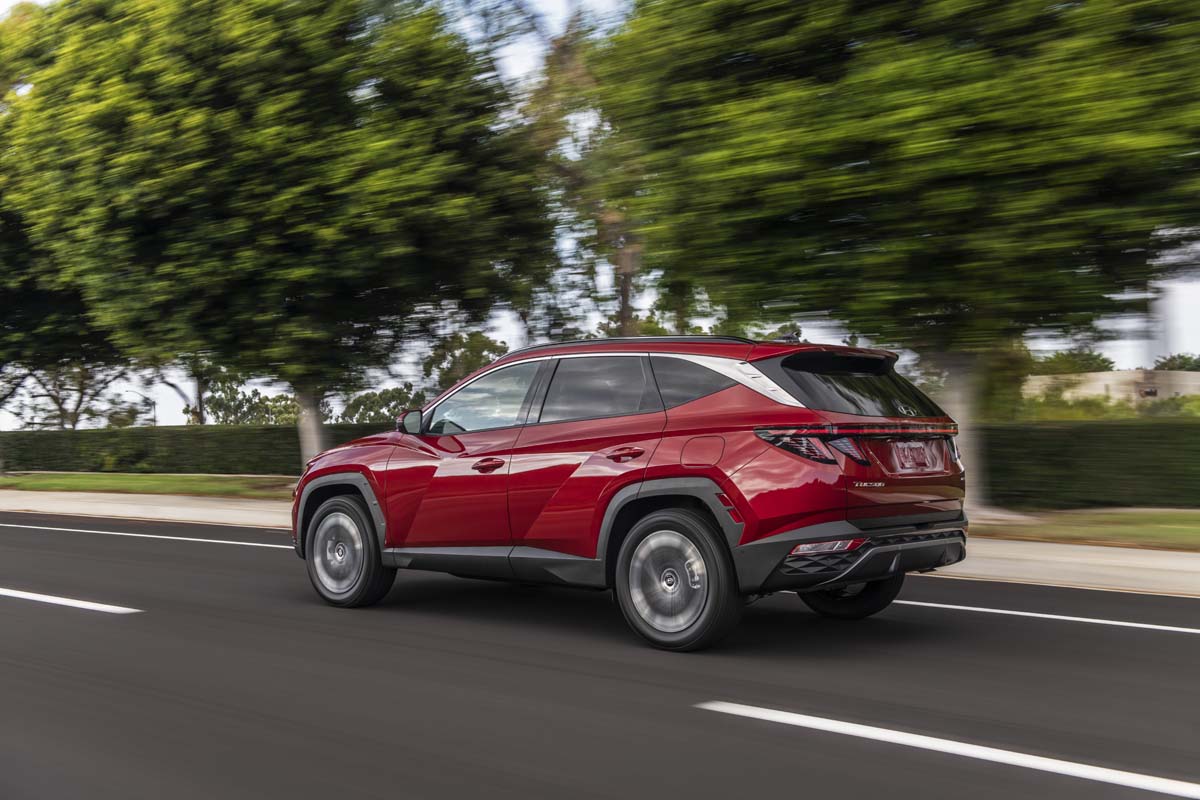
As the world-wide automobile industry transitions toward environmentally friendly power sources, there are many choices—not the least of which are gasoline-electric hybrids like 2024 Hyundai Tucson Hybrid Limited.
Despite the headlong rush to develop new electric vehicles (“Hyundai Motor Co. is on a tear,” Automotive News reported), for now standard hybrids still make the most sense for many buyers. Though they are more expensive than regular ICE (for internal combustion engine) vehicles, they are less expensive than plug-in hybrids and full-on electrics.
Many buyers likely would choose an electric for its smooth performance, silent running, instant acceleration, economy and minimal impact on the environment. Downsides mainly have to do with long-distance driving and the need to plan for stops to charge the battery. There’s even a name for it: range anxiety.
That’s not a problem with standard hybrids, which run mainly on gasoline with boost from an electric motor or motors that recharge in normal operation.
An alternative is a PHEV, or plug-in hybrid. But most of them have short ranges—up to about 40 miles—in electric-only operation. Also, they generally are way more expensive than standard hybrids, and owners often don’t bother to plug-them in, treating them as if they were regular hybrids.


Eventually, once the nation builds an infrastructure of charging stations, electrics will rule. It’s analogous to the early 20th century when the country rushed to build filling stations so drivers could gas up and avoid having to buy gasoline at drug stores.
Meanwhile, hybrids like South Korea’s Hyundai Tucson will bridge the gap. This compact crossover sport utility vehicle is among the better choices for people seeking a decent-performing, economical, practical and environmentally friendly vehicle.
There are three basic Tucson versions: the gasoline-fueled model, the plug-in (PHEV) hybrid and the standard hybrid tested here. It is powered by a 1.6-liter four-cylinder gasoline engine mated to a 59-horsepower electric motor. The system makes a combined 226 horsepower and 258 pound-feet of torque, or twisting force, that enables acceleration runs to 60 miles an hour in about seven seconds.
At the same time, the hybrid power train, with the Tucson’s six-speed automatic transmission, all-wheel drive and 3,837-pound curb weight, delivers city/highway/combined fuel economy ratings by the Environmental Protection Agency of 37/36/37 miles to the gallon.
The Tucson seats five comfortably with a big chunk of space for cargo behind the back seat. It has a total of 149 cubic feet of interior room, divided 108 cubic feet for passengers and 41 cubic feet for cargo. The Environmental Protection Agency classifies it as a “small sport utility vehicle,” despite the fact that it would be called a large car if it were a sedan.
The tested top-line Limited, called a trim level in the industry, arrived with a complement of standard and optional safety and convenience equipment that gave the tester a near-luxury personality.
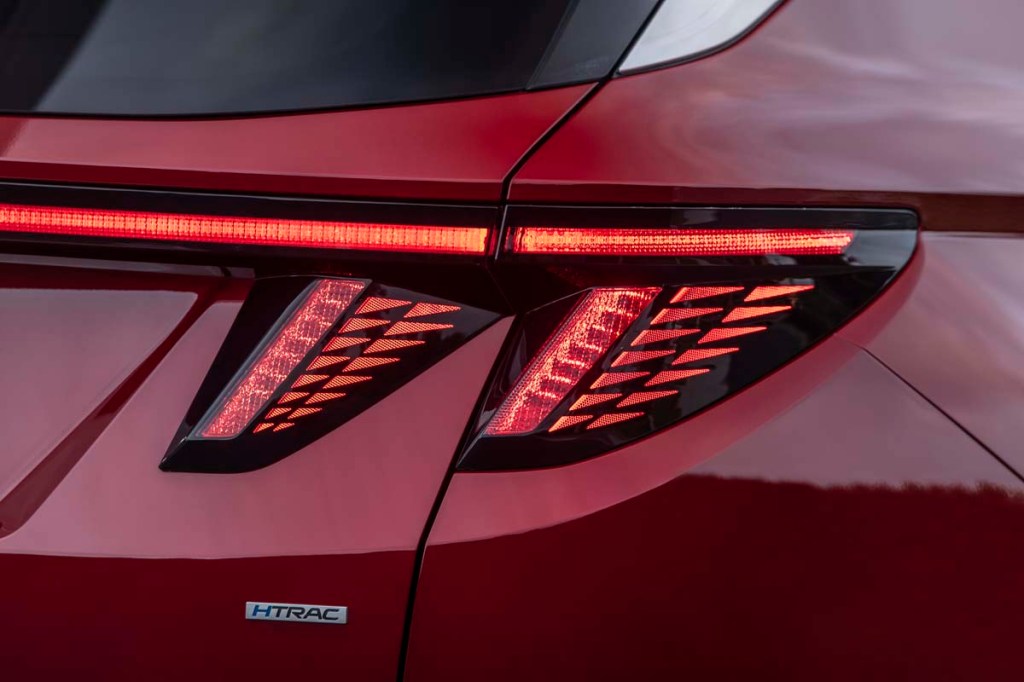
Start with the classy, curvy exterior styling, accented on the tester with a “deep sea gray” paint job, attractive alloy wheels, roof rails; a panoramic sunroof and LED lighting all around.
Safety equipment includes driver attention warning, automated emergency braking with pedestrian detection; lane departure warning and lane-keeping assist, and adaptive cruise control.
Inside, the upholstery is leather trimmed, as is the steering wheel; power front seats are heated and ventilated; rear seats are heated; and there’s dual-zone automatic climate control.
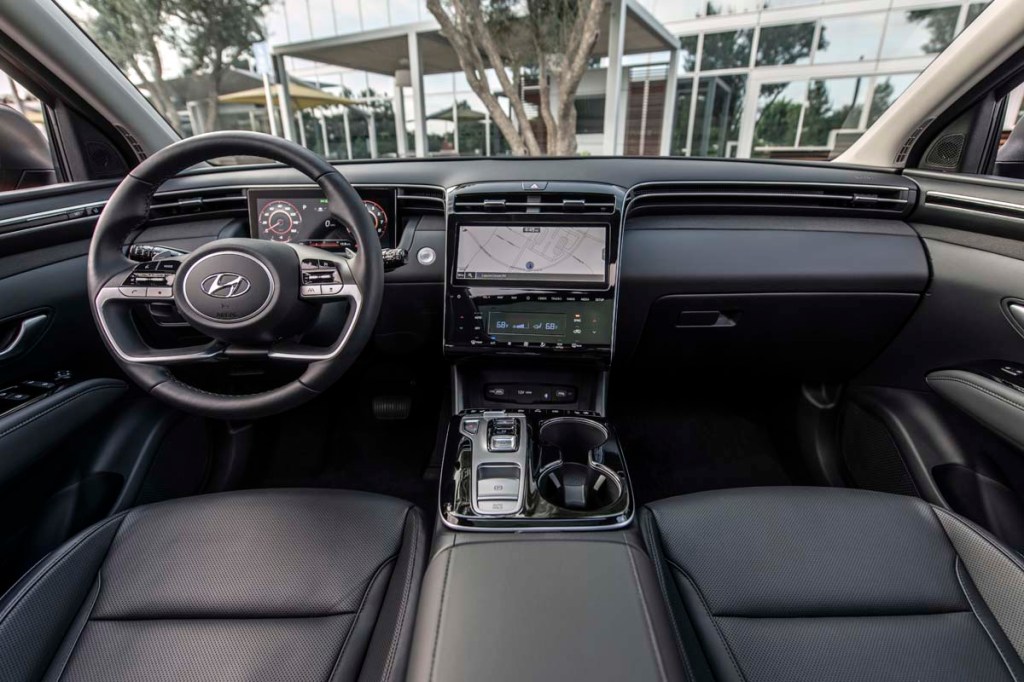
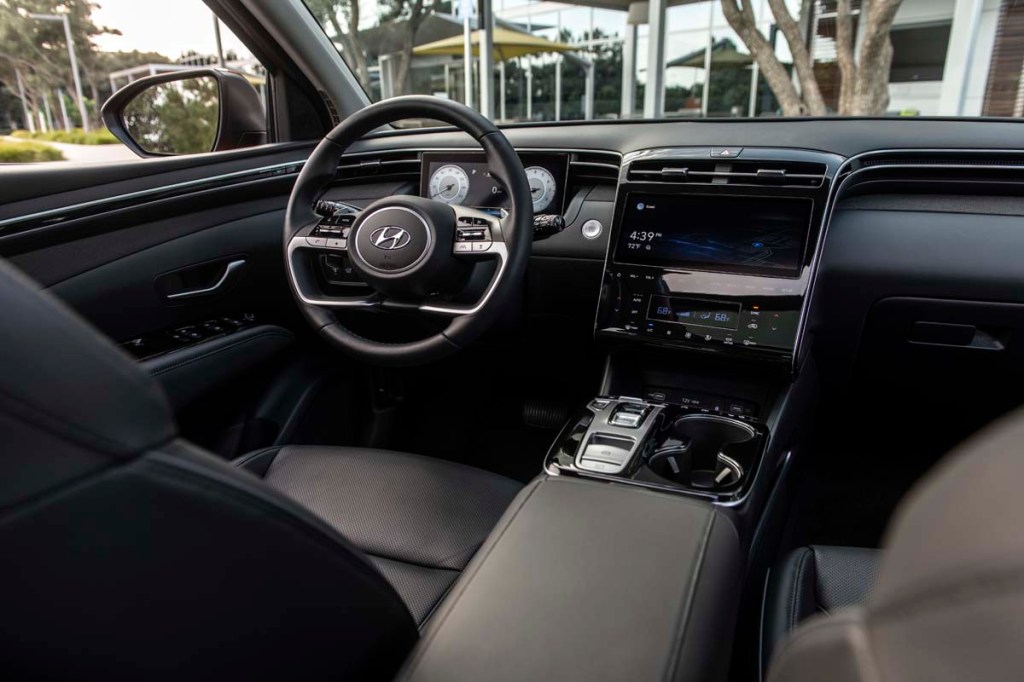

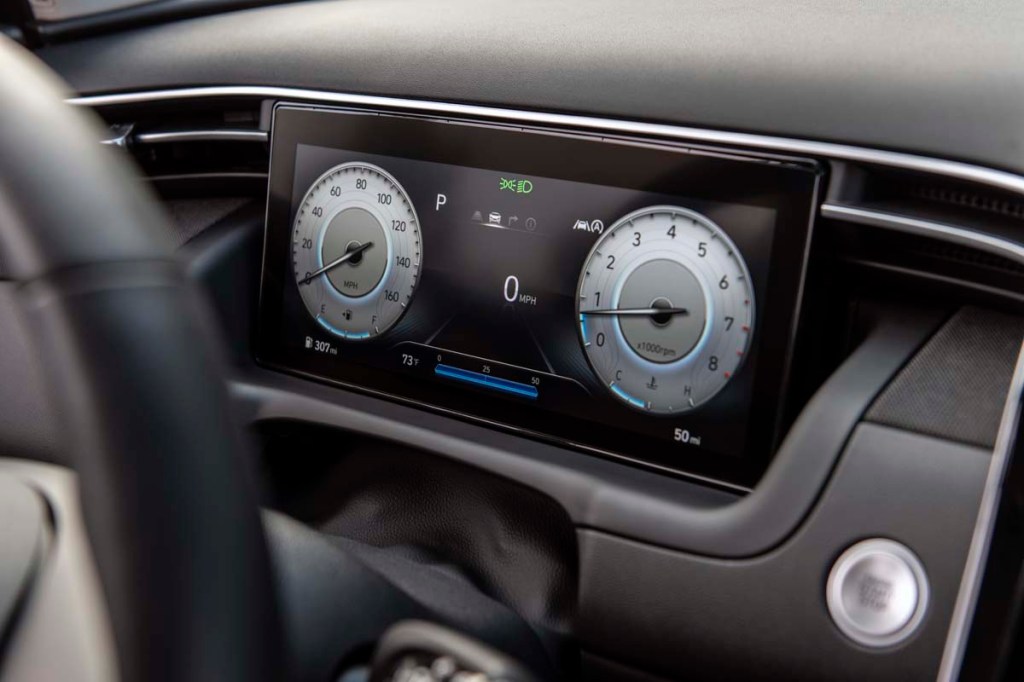
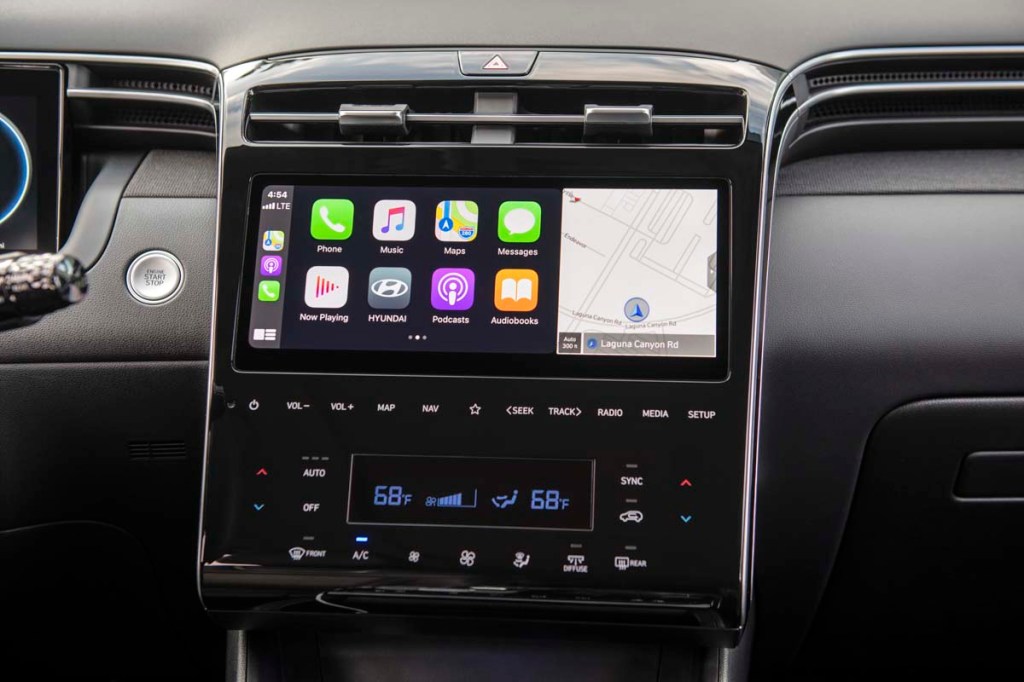

The dashboard display houses a dual screen with gauges and infotainment functions, including Apple Car Play and Android Auto. Also included are a Bose premium audio system, wireless smart phone charging and remote starting via Hyundai’s digital key app.
Though the Tucson Hybrid faces tough competition from the likes of Toyota’s RAV4, Honda’s CR-V, Ford’s Escape, Nissan’s Rogue and Chevrolet’s Equinox, it acquits itself smartly underway.
Though it’s not the quickest out of the chute, the Tucson delivers a responsive throttle, capable brakes and quick steering. It has a solid feel on curving two-lane roads, cruises sedately on multi-lane freeways with a comfortable ride and an interior that muffles a good percentage of road, engine and tire noise.
The 2024 Tucson Hybrid, with all its features and an excellent warranty, comes with a base price of $40,800 and, as tested. $41,010—at a time when the average price of a new car in the United States is nearing $50,000.
Specifications
- Model: 2024 Hyundai Tucson Hybrid Limited AWD four-door crossover sport utility vehicle.
- Engine: 1.6-liter, 180 hp four-cylinder gasoline with 59 hp electric motor; combined 226 hp, 258 lb-ft torque.
- Transmission: Six-speed automatic with manual shift mode and all-wheel drive.
- Overall length: 15 feet 2 inches.
- Height: 5 feet 6 inches.
- EPA/SAE passenger/cargo volume: 108/41 cubic feet.
- Weight: 3,837 pounds.
- Towing capability: 2,000 pounds w/ trailer brakes, 1,650 without.
- EPA city/highway/combined fuel consumption: 37/36/37 mpg. Regular unleaded.
- Base price, including destination charge: $40,800.
- Price as tested: $41,010.
Disclaimer: The manufacturer provided the vehicle used to conduct this test drive and review. Photos ©Hyundai
 Frank A. Aukofer
 Jason Fogelson
 Matthew P. Aukofer
 Tod Mesirow
 The Review Garage
Leave a comment