
~ A DriveWays Review ~
by Frank A. Aukofer
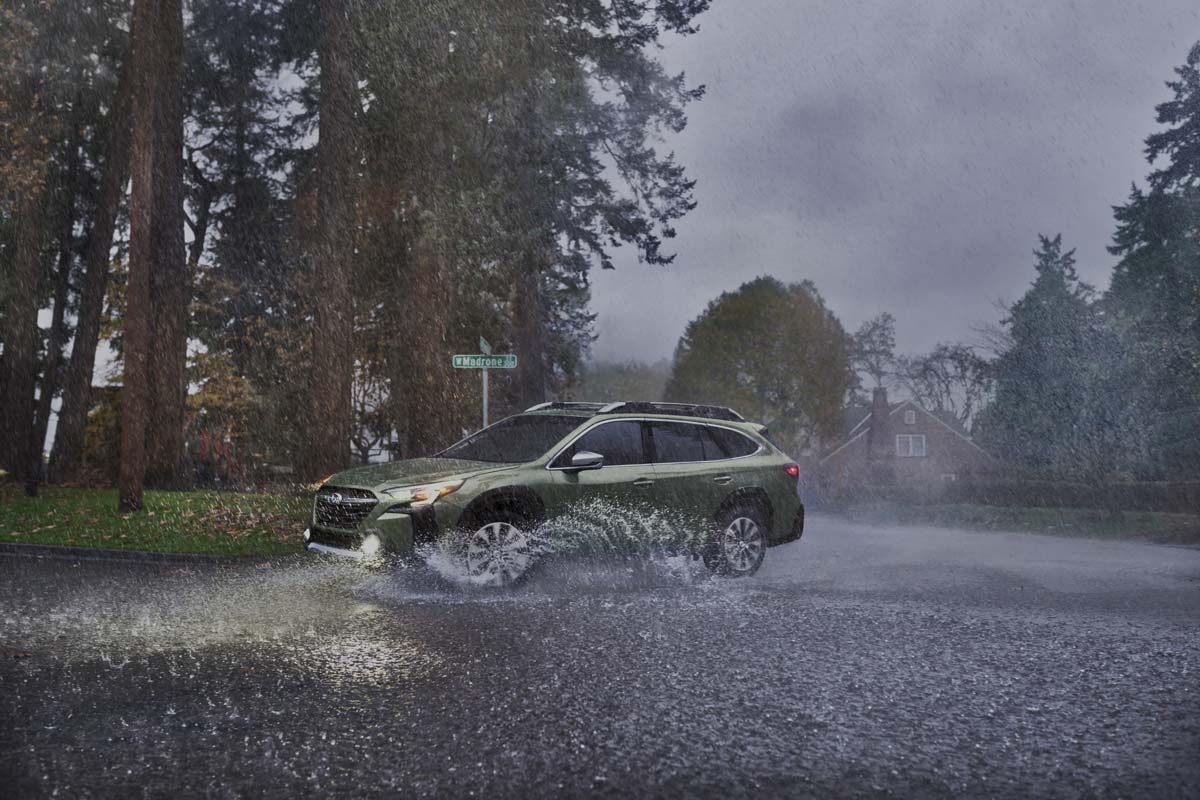
More than 30 years ago, Subaru finessed consumer interest by re-thinking its midsize Legacy station wagon as a competitor among the then-growing body of sport utility vehicles, which at the time were mainly based on trucks with body-on-frame construction.
The result was the Subaru Outback, which has become the Japanese company’s most popular model with 161,814 U.S. sales in 2023. It still looks and feels like its station wagon progenitor but with more off-road capabilities as a bona-fide crossover sport utility vehicle. A crossover is built with unit-body construction, like a car, unlike the body-on-frame design of the typical truck-based SUV.
Though it has decent off-road capabilities, including ground clearance of nearly nine inches, the Outback retains its station wagon roots with a ride and handling on paved roads that is mostly car-like competent, quiet and comfortable.
Handling, with good steering feedback, is fuss-free on curving roads if the driver doesn’t push too hard. The Outback also tracks true in straight-line motoring on Interstate highways. There’s some minor intrusion of engine, road and tire noise but not enough to become tiresome.
The Outback is a looker. Unlike some of the crossover SUVs with their boxy lines, the Outback has an attractive, curvy shape. On the tested 2024 Touring XT model, it was enhanced by “Dark Mahogany Pearl” paint, which looked shiny black from a distance but up close displayed dancing red accents.

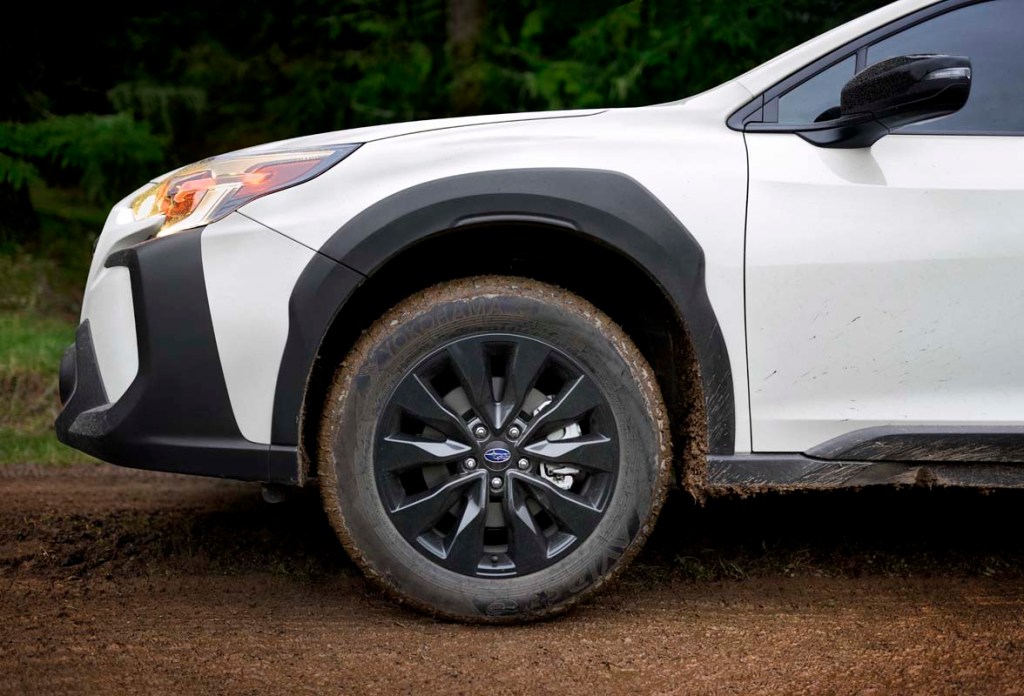
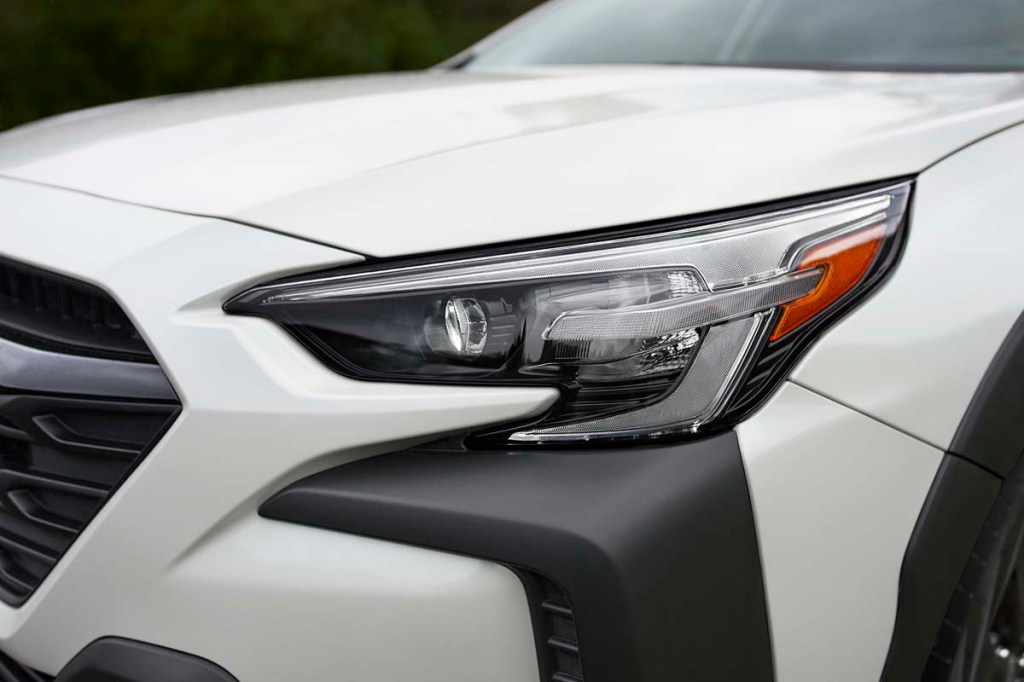

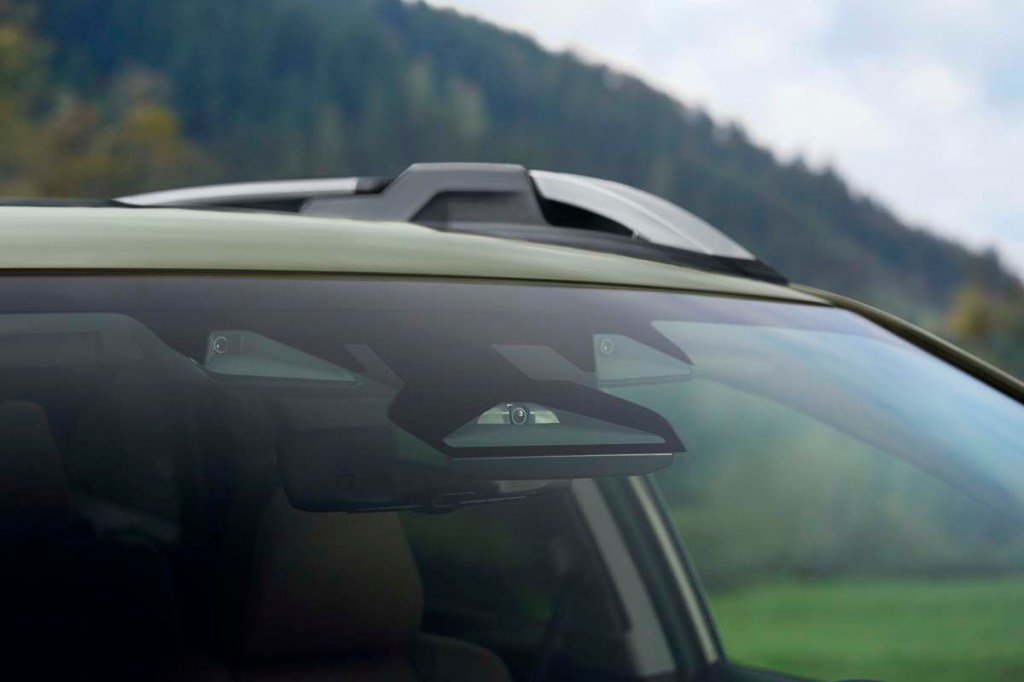
The exterior also featured 18-inch machine-finished black alloy wheels, roof rails with retractable cross bars, satin chrome automatic folding and heated outside mirrors, and steering responsive LED headlights with high beam assist.
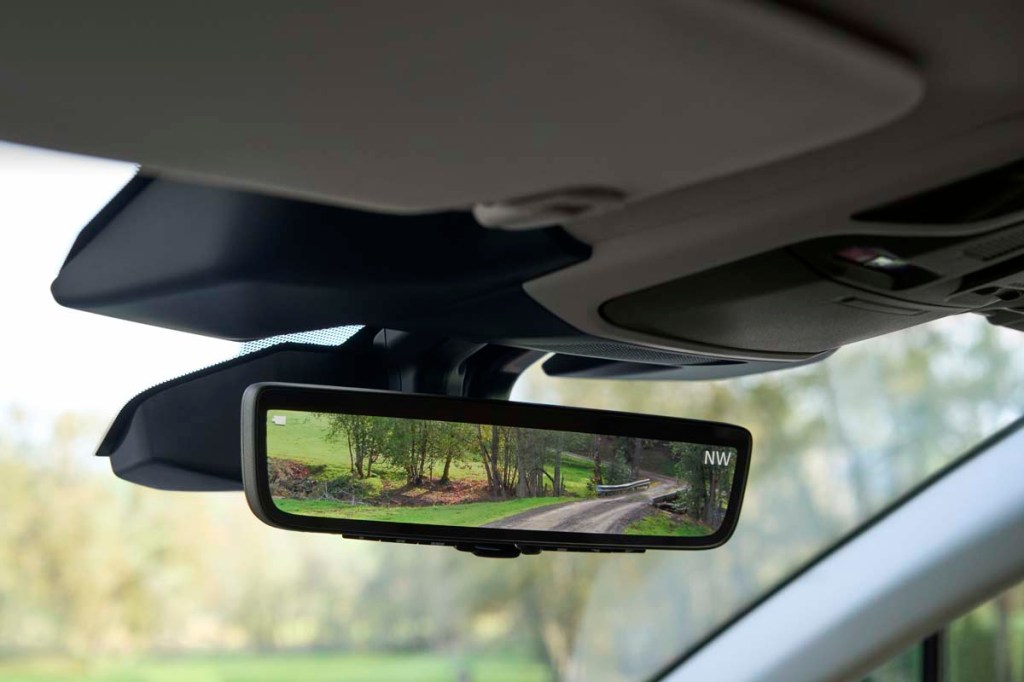
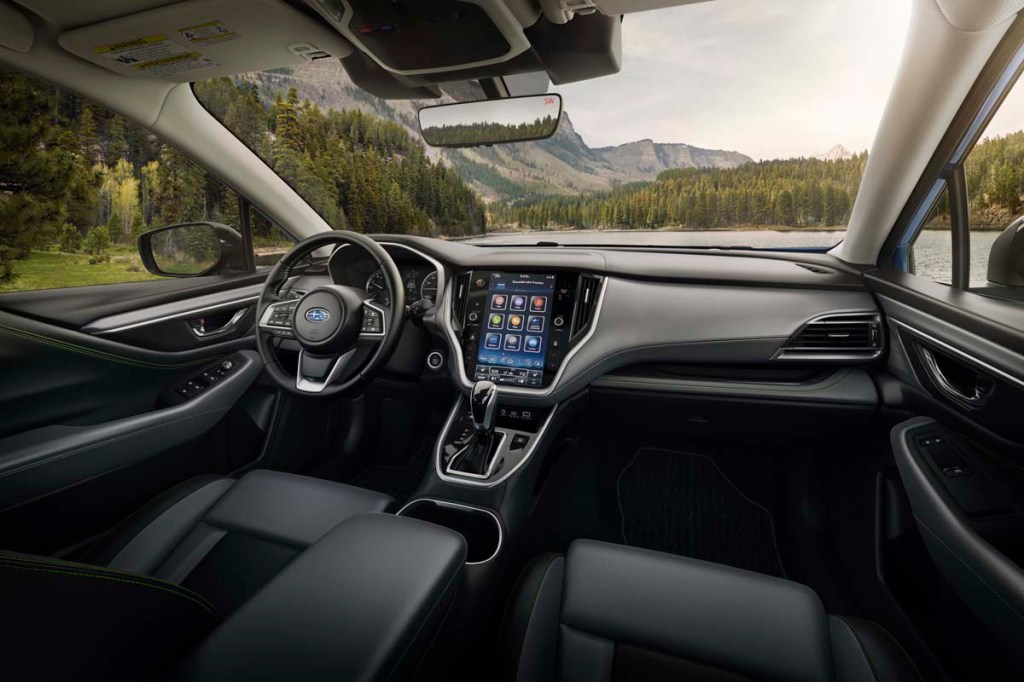
Inside, the driver and passengers are treated to a power sunroof, automatic dual zone climate control with air filtration, perforated leather-trimmed upholstery with supportive bolstering, multi-function center touch screen, HD radio and SXM satellite radio, Subaru Starlink navigation and smart phone connectivity, powered and heated front seats with driver’s lumbar support, heated back seats, heated leather-covered steering wheel, power windows with automatic up and down on all windows, and an auto-dimming rear-view mirror with a compass.
The Outback comes in nine versions, called trim levels, starting at about $30,000. Tested for this review was the top-line Touring XT with a starting price of $44,090, including the destination charge. With one minor option of floor mats, the bottom-line sticker came to $44,231.
Like all Subaru models except the rear-drive BRZ sports car, the Outback has all-wheel drive. It gets its power from a horizontally-opposed, also called a boxer, engine. The design, used in millions of the early rear-engine air-cooled Volkswagens, has cylinders that lie feet to feet on both sides of the crankshaft instead of standing upright or leaning as with inline or V-configured engines.


Boxer engines, also sometimes called “flat,” have a low profile and can be mounted low in the engine compartment to deliver improved handling dynamics.
The base Outback engine is a 2.5-liter boxer that makes 182 horsepower, which has been criticized as somewhat wimpy. But the tested Touring model came with the XT designation, which includes a turbocharged 2.4-liter mill that delivers 260 horsepower and 277 pound-feet of torque, or twisting force.
It’s enough to accelerate the nearly two-ton Outback to 60 miles an hour in the five to six second range, according to independent tests. The less powerful 182 horsepower engine is slower by several seconds.
Both engines get the grunt to all four wheels via a continuously variable automatic transmission, which has no shift points because it uses belts and pulleys to multiply power. Though smooth in operation, some are criticized for sounding and feeling as if they are over-revving.
But the Outback’s more powerful XT mostly mitigates that.
Moreover, for folks who like to shift for themselves, the Outback’s CVT includes an eight-speed manual-shift mode that mimics a standard automatic transmission.
Even if you’re not drawn to bashing around in the countryside, in which the Outback acquits itself well, the tested Outback Touring is a likeable everyday driver. With the power driver’s seat and tilt-and-telescoping steering wheel, it’s easy to find a decent driving position. The front seats have prominent bolsters to hold the torso in place in corners, and there’s enough support for fatigue-free hours behind the wheel.
There’s support and comfort for four, including the driver, though as usual the center-rear passenger gets shortchanged with a narrow seat, a high, hard cushion and a floor hump.
Specifications
- Model: 2024 Subaru Outback Touring XT four-door crossover sport utility vehicle.
- Engine: 2.4-liter four-cylinder, turbocharged; 260 hp, 277 lb-ft torque.
- Transmission: Continuously variable automatic with eight-speed manual-shift mode and all-wheel drive.
- Overall length: 15 feet 11 inches.
- Height: 5 feet 7 inches.
- EPA passenger/cargo volume: 103/33 cubic feet.
- Weight: 3,975 pounds.
- Towing capability: 3,500 pounds.
- City/highway/combined fuel consumption: 22/29/25 mpg.
- Base price, including destination charge: $44,090.
- Price as tested: $44,231.
Disclaimer: The manufacturer provided the vehicle used to conduct this test drive and review. Photos ©Subaru
 Frank A. Aukofer
 Jason Fogelson
 Matthew P. Aukofer
 Tod Mesirow
 The Review Garage
Leave a comment