
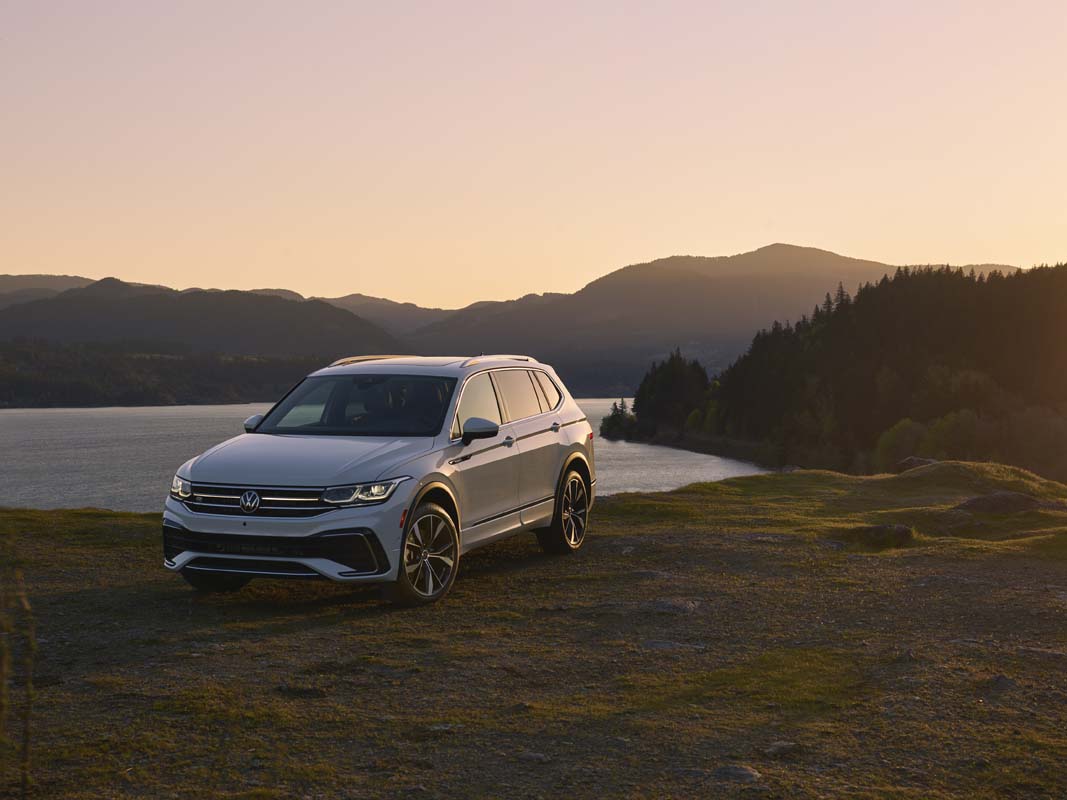
~ A DriveWays Review ~
by Frank A. Aukofer
If your taste in pets leans toward small reptiles and large feral cats, you can match your craving in sculptured metal by choosing a compact crossover sport utility vehicle, the Volkswagen Tiguan. Its name, in German, is a combination of tiger with iguana.
No argument there. Volkswagen (People’s Car) is a German company founded in 1937. It became famous around the world with its Type 1 model, popularly called the Beetle, which had a 65-year run before being retired in 2003.
The 2024 Tiguan SEL R-Line crossover SUV, however, is about as far from the Type 1 Beetle as Wolfsburg is from Hackensack, N.J. The original Beetle came with an air-cooled horizontally opposed (boxer) four-cylinder rear engine, meaning that the cylinders lie flat, feet to feet, on both sides of the crankshaft.
Though VW no longer uses it, the design survives today in Porsche, Subaru and the Toyota 86, also built as the Subaru BRZ. Its main advantage is its low center of gravity, compared to engines where the cylinders stand upright at attention or leaning as in V configurations. It enables improved handling, though other modifications are required as well.


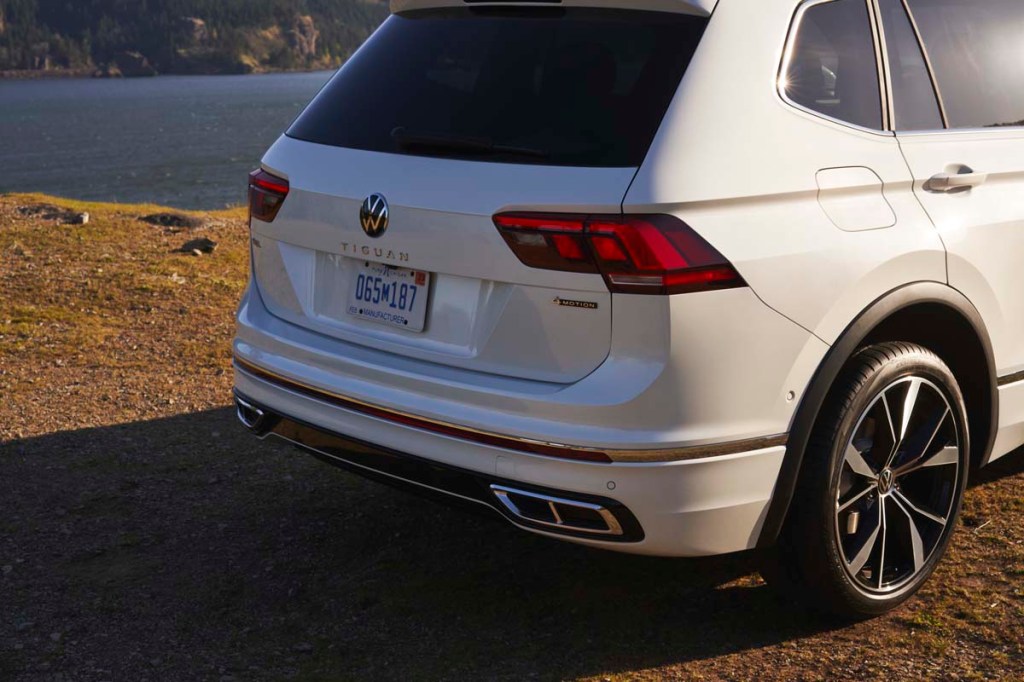

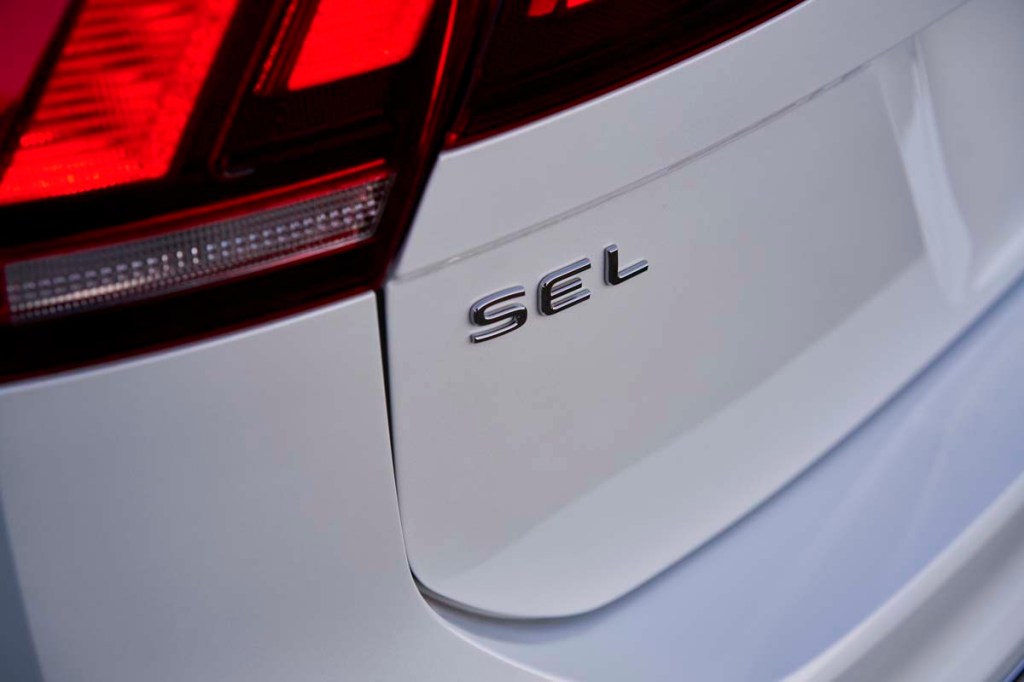
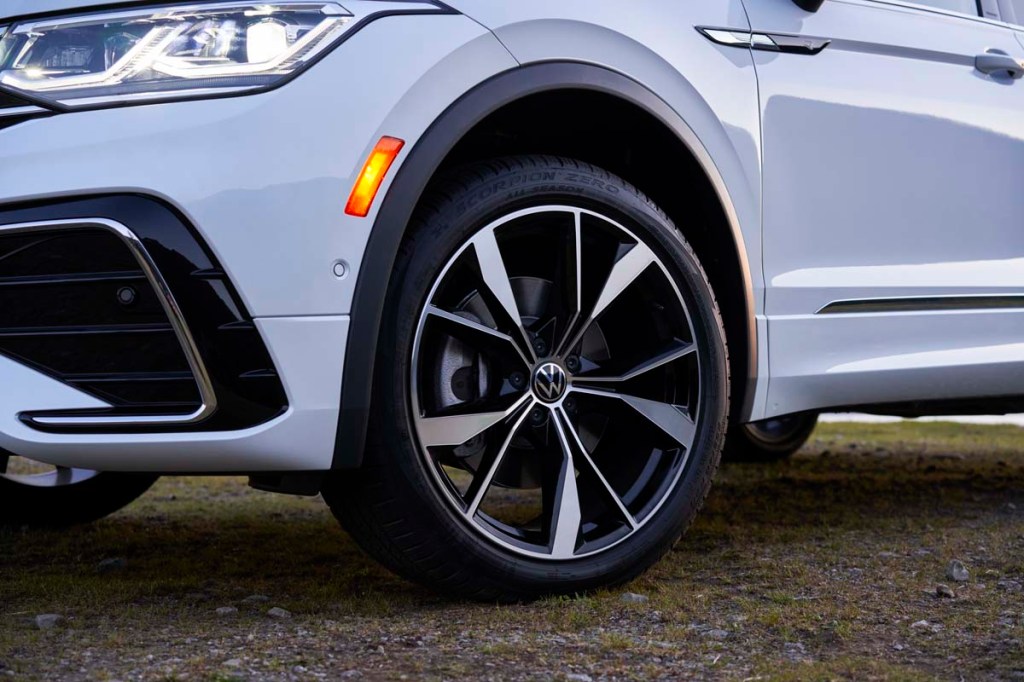

Like other automakers chasing the Yankee dollar, Volkswagen now has spread its spoilers to encompass a broader portfolio of models, ranging from small runabouts to big sport utility vehicles like the Atlas.
The tested Tiguan, stretching 15 feet 6 inches, slots somewhere near the middle of the lineup, and is a strong contender among the myriad crossover SUV offerings.
In motor vehicles, looks are always the first consideration for prospective buyers, and the Tiguan fills the bill. The tester, a top-line SEL R-line model, arrived with sculptured exterior styling and attractive Atlantic Blue Metallic paint, along with a Storm Gray interior. If not compelling, it certainly was a grabber.
The mechanicals followed the theme. Power comes from a turbocharged, 2.0-liter four-cylinder engine that delivers 184 horsepower and 221 pound-feet of torque, or twisting force. It is connected to all four wheels through an eight-speed automatic transmission with a manual shifting mode.
Floor the pedal to the carpet, and this Tiguan can hit 60 miles an hour in the seven to eight second range, according to independent tests. Though that’s not outstanding in this era of expected rapid acceleration, especially among electric vehicles, it is more than adequate for a two-ton SUV that can be equipped with a third-row seat, upping the passenger capacity from five to seven.
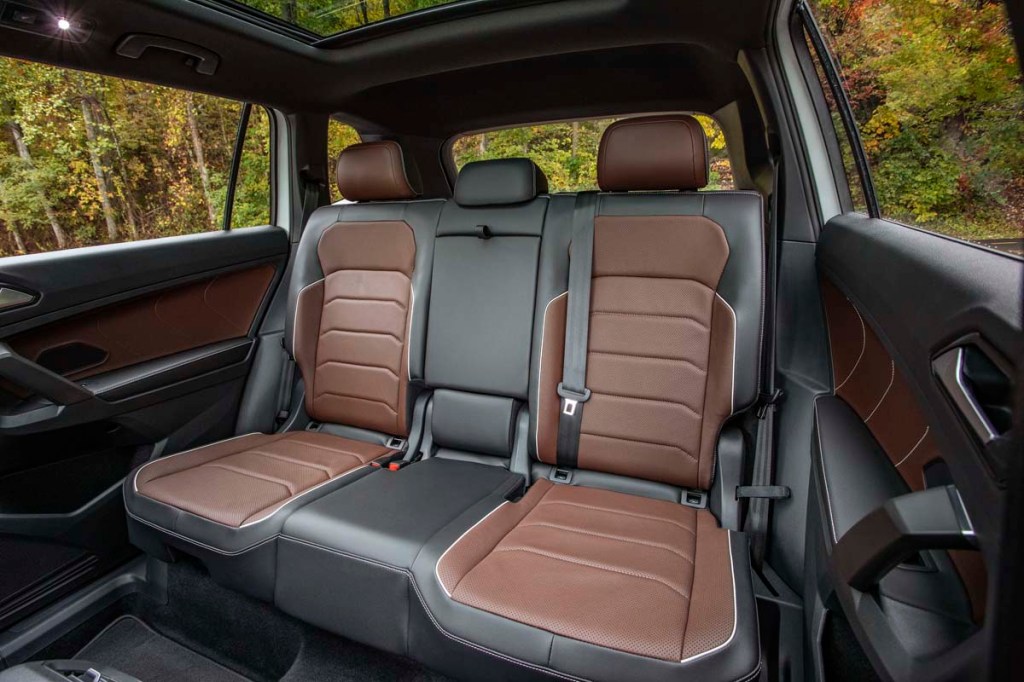
The tester was a five-passenger model, with perforated leather upholstery. The second row was divided 2/3rds and 1/3rd. Seatbacks fold nearly flat and the outboard rear passengers have ample headroom and knee room. Only the center-rear passenger gets dissed with a hard cushion and a prominent floor hump.




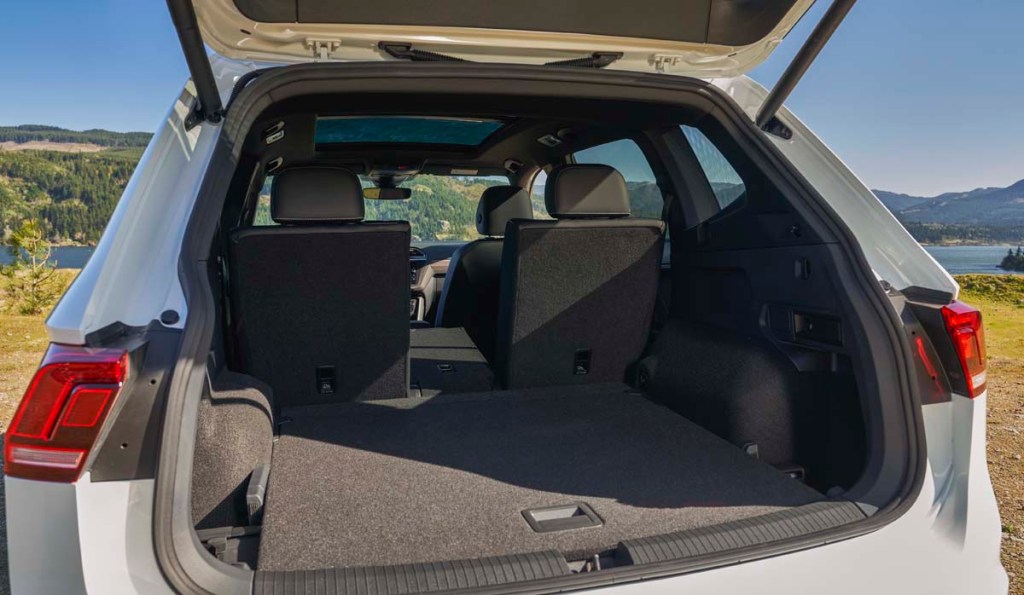
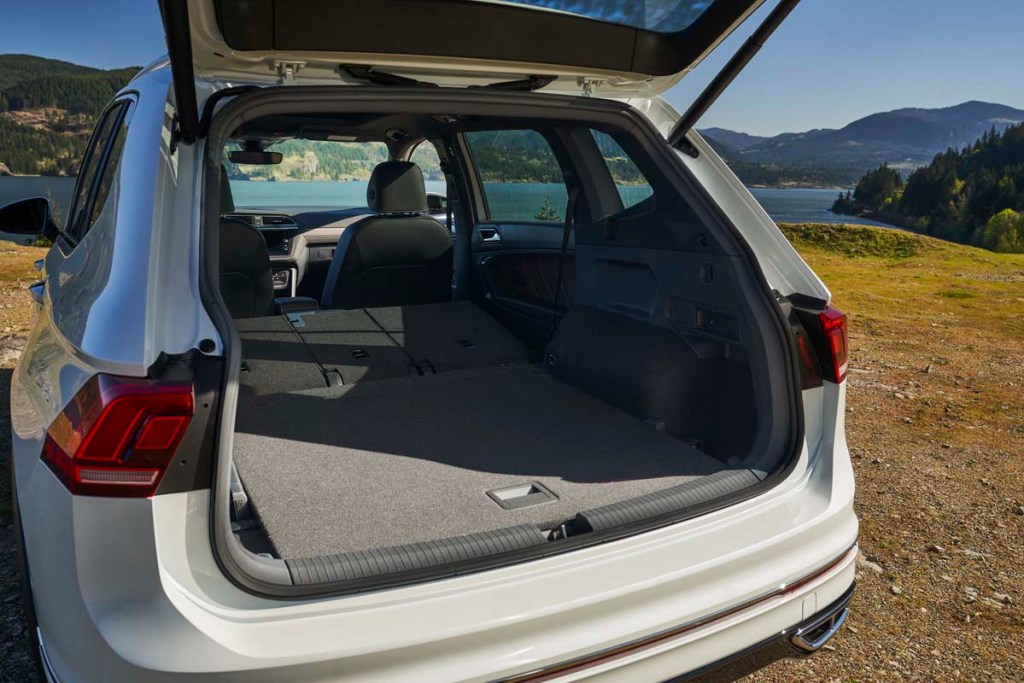

The Environmental Protection Agency rates the tested SEL R-Line at offering 98 cubic feet of space inside for passengers—about what you’d find in a midsize sedan—along with 38 cubic feet for cargo behind the rear seat. If you opt for the third-row seat, of course, the cargo area shrinks by about two-thirds. Of course, the space expands if the second- and third-row seatbacks are folded.
The tested Tiguan came with a long list of standard equipment at its base price of $39,855, including the destination charge. It was so comprehensive there were no extra-cost options listed and the as-tested price was identical to the base sticker. Even the attractive exterior paint and leather interior were listed as no-charge options.
Safety and driver assistance equipment included Volkswagen’s IQ Drives components: adaptive cruise control with stop-and-go; forward collision warning with automated emergency braking and pedestrian detection; lane-keeping assist; semi-automated vehicle assistance in a medical emergency; blind-spot monitor, and rear traffic alert.
Technology and convenience items featured a hands-free power rear liftgate; keyless access to the passenger doors; anti-theft alarm with an engine immobilizer; remote engine starting; Bluetooth connectivity with smart phone integration, and wireless device charging.
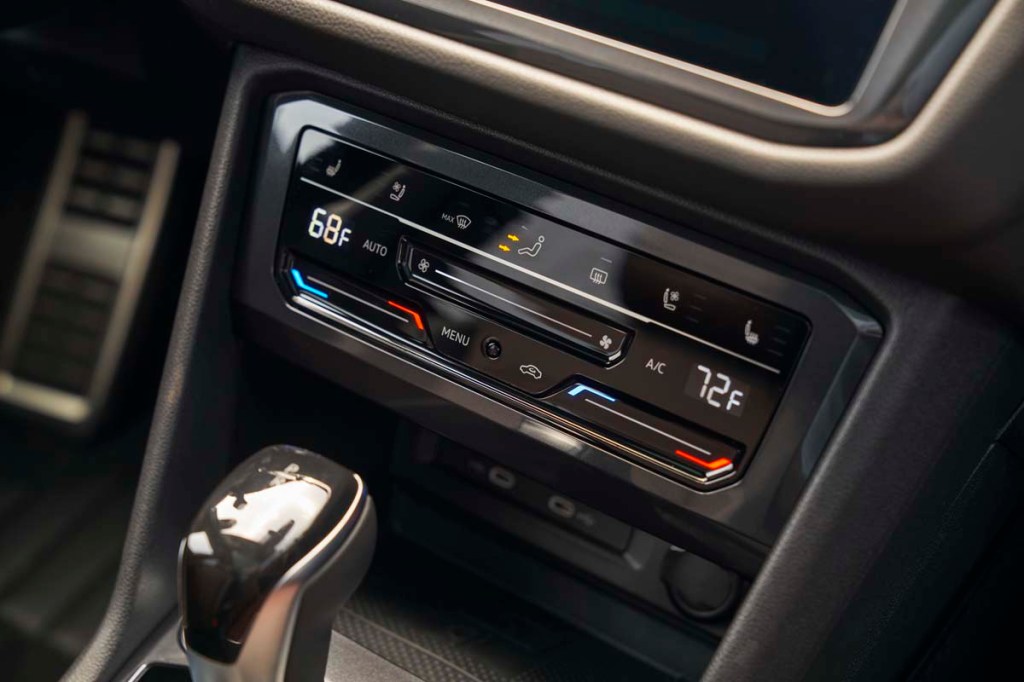
An eight-inch center screen houses controls for navigation, AM/FM/HD radio, and SXM satellite radio with a three-month trial. Also: Fender premium audio with subwoofer, electronic parking brake, and USB-C charging ports.
All of that, along with a rigid chassis and plenty of sound-deadening insulation, enables the Tiguan to deliver pleasant long-distance travel on a variety of highways. It tracks truly in a straight line and handles curving roads with accurate steering and responsive feedback.
Specifications
- Model: 2024 Volkswagen Tiguan SEL R-Line four-door crossover sport utility vehicle.
- Engine: 2.0-liter four-cylinder, turbocharged; 184 hp, 221 lb-ft torque.
- Transmission: Eight-speed automatic with manual shifting mode and all-wheel drive.
- Overall length: 15 feet 6 inches.
- Height: 5 feet 7 inches.
- SAE/EPA passenger/cargo volume: 98/38 cubic feet.
- Weight: 4,003 pounds.
- Towing capability: 1,500 pounds.
- EPA city/highway/combined fuel consumption: 22/29/24 mpg.
- Base price, including destination charge: $39,855.
- Price as tested: $39,855.
Disclaimer: The manufacturer provided the vehicle used to conduct this test drive and review. Photos ©VW
 Frank A. Aukofer
 Jason Fogelson
 Matthew P. Aukofer
 Tod Mesirow
 The Review Garage
Leave a comment