

~ A DriveWays Review ~
by Matthew Aukofer
For many Americans, the dream of buying a new car may be slipping out of reach as more and more people are being priced out of the market. Factors such as inflation, global chip supply shortages and production costs are squeezing everyday Americans, making car-buying a much more exclusive club.
The average price of a new car in the United States hit $48,759 in December 2023, about $12,000 higher than it was just five years ago. Car companies are increasingly investing in higher-end models with premium price tags, rather than focusing on budget-friendly options. And interest rate hikes from the Federal Reserve have led to rising monthly payments for new cars. Research shows that the average monthly payment for a new ride reached a record high of $730 in the first quarter of 2024, about $80 higher than a year ago.
Ford was on the right track when it introduced its smallest pickup truck, the Maverick, in 2021. The base price of the new market entrant was just $19,995, and you could get one well-equipped—including a hybrid drivetrain—for well under $25,000, if you were lucky. The idea that you could drive a hybrid pickup home for around 20 grand rocked the automotive world. But the timing was terrible.
It was introduced in the middle of the Covid-19 pandemic, which hit in early 2020. The factories that make silicon wafers, the ultra-flat disks on which circuit patterns are printed to build chips, faced disruptions due to factory closures, transportation challenges and labor shortages during the lockdown. Demand for semiconductor chips quickly outpaced supply, hitting all corners of the market, including auto manufacturers.
We’re still dealing with the after-effects today.
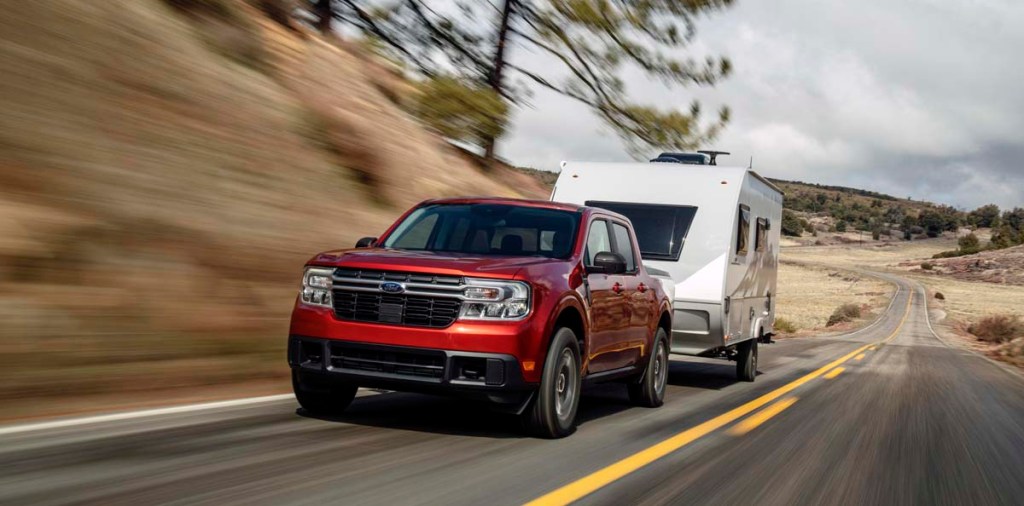
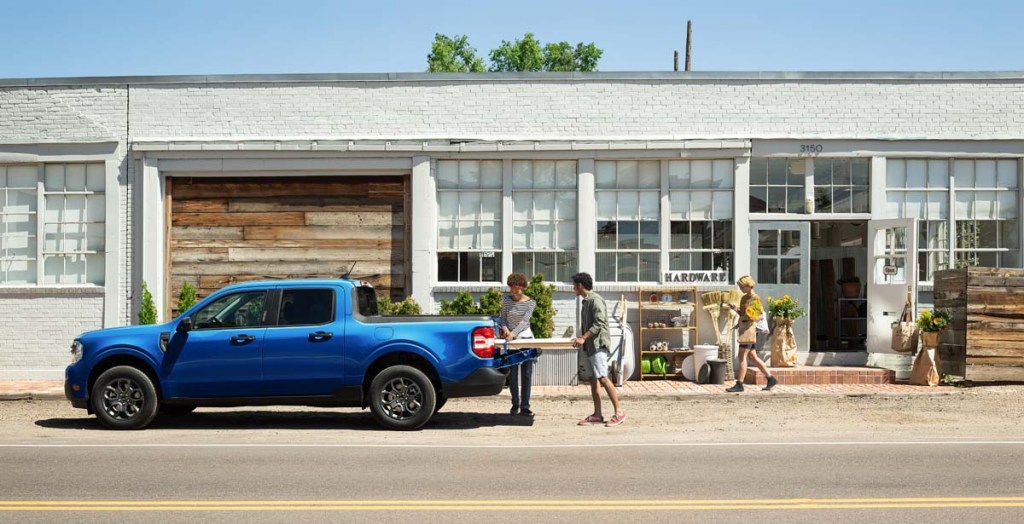
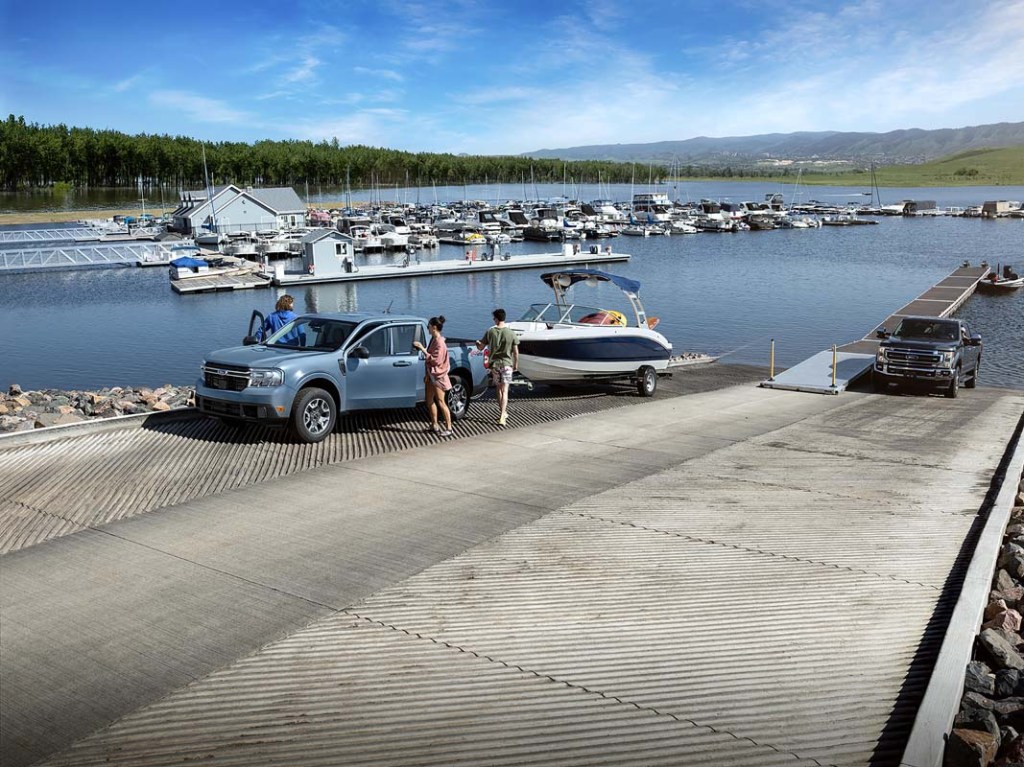

The base 2024 Ford Maverick XL starts at $25,420 (including the mandatory destination/delivery fee), a 19-percent increase since the model was first introduced three years ago. The Lariat trim, reviewed here, starts at a hefty $34,855.
With options, the tested vehicle came to $37,330, including the destination charge. It’s below the industry average, but still a chunk of change for many buyers. The tested model did not even include the hybrid drivetrain, which will run about $1,500 more.
Buyers can tack the hybrid drivetrain onto any of the Maverick trim levels. The EPA estimates that hybrid variants are good for 42 mpg city and 33 mpg highway; the nonhybrid is rated for 23 mpg city and 30 mpg highway with front-wheel drive and 22 mpg city and 29 mpg highway with all-wheel drive, which is how our test vehicle was equipped. The hybrid system is not available with all-wheel drive. Buyers will have to determine if the extra cost of the hybrid drivetrain is worth it for them.
The standard 2.0-liter four-cylinder gas engine is coupled to an eight-speed automatic transmission. It provides a spunky 250 horsepower and 277 pound-feet of torque, or twisting force. It is a smooth-running engine that seems more powerful than its four cylinders would suggest, and it has a good exhaust note. Standard Mavericks can tow up to 2,000 pounds but adding the tow package, as our test vehicle did, doubles that to 4,000 pounds. Two competitors, the Hyundai Santa Cruz and Honda Ridgeline, can tow up to 5,000 pounds when properly equipped.
The Lariat interior of Maverick includes an interesting mix of materials—mostly plastic—and contrasting colors that provide an aesthetically pleasing place to spend time. Some of the plastic panels on the dashboard and doors resemble a piece of paper that has been crumpled up and unfolded, providing a unique crinkled texture. The door panels offer an interesting take on storage space, allowing for tall drinks in skinny containers. No large coffee mugs or wide travel bottles will fit in the doors or in any of the other cupholders, for that matter.


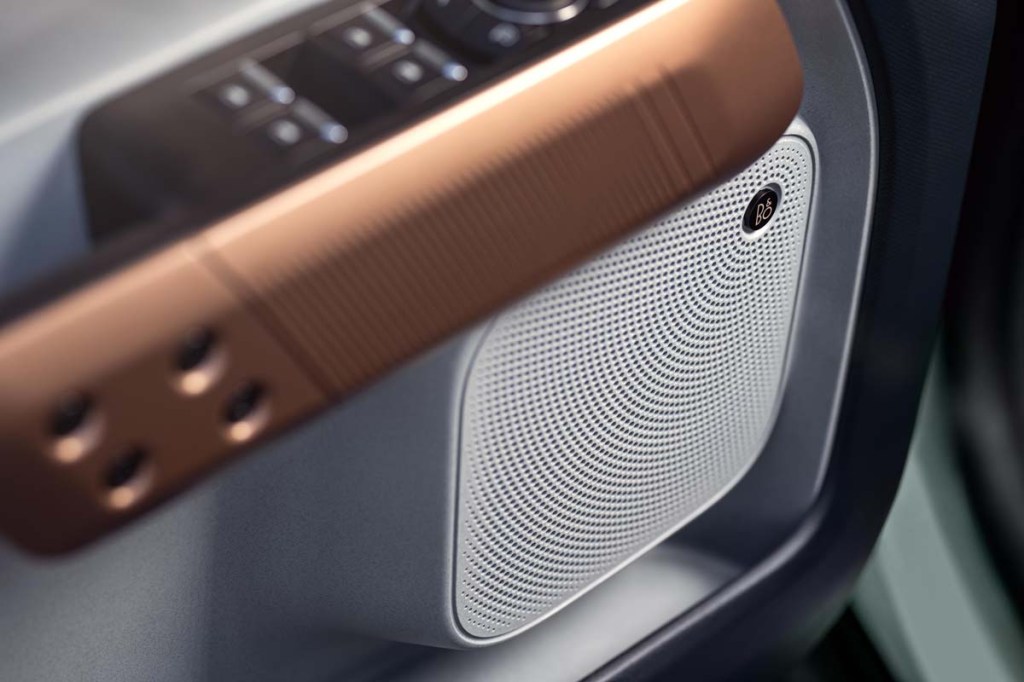

The two-tone, brown and black seats on the tested vehicle were comfortable and felt like they were made of a supple vinyl—more rubbery feeling than leather. They were comfortable enough, but with no seat ventilation, they could get sweaty and sticky on hot days. The rear seats were slightly cramped but also comfortable. The middle rear passenger must deal with humps in the seat and floor well, common for many vehicles today. The bench seat can be lifted to expose 2.6 cubic feet of under-seat storage, a nice touch.
There was no moonroof on the tested vehicle, though you can order one as a $1,500 option on the XLT and Lariat trim levels.
The bed in the tested vehicle was sprayed from the factory with a durable bedliner and included innovative hooks on tracks near the top rails that could be slid fore and aft to fit the cargo load. Two more cargo hooks were mounted flush with the floor in the front of the bed, and four more hooks were positioned on the sidewalls near the tailgate. These rear hooks could not be moved and they jutted out into the cargo area. Extra care must be taken when loading soft items like mattresses, or they could easily tear a hole.
The bed also included a 120-volt power outlet, bright auxiliary lighting and one small storage cubby in the right rear corner. This cubby had a flimsy plastic cover that looked like it could break by breathing on it. At just four feet, six inches in length, the bed is short and many drivers will find they need to drop the tailgate to haul longer items. It’s worth noting that when the tailgate is open, the rear-view camera points straight down at the ground, rendering it useless.
The infotainment system is better than in other Fords, but still needs work. There weren’t as many intrusive pop-up messages and warnings. But there’s still too much of a learning curve to get into the minds of Ford’s designers. Buttons that are arrows don’t always work as expected. Buttons that work one way on one screen don’t work the same way on another screen. Some text is tappable—to change HD radio stations, for example—but they don’t look like buttons. Press the screen and see what it does became our mantra. Using it felt like a frenzy of trial and error.
The National Highway Traffic Safety Administration has given the 2024 Maverick an overall safety rating of four out of five stars. It received five stars for driver frontal crashes, and front and rear seat side crashes. It received four stars for passenger frontal crashes and rollover crashes.
The Maverick is a functional four-door, five-passenger hauler. It made quite a splash in 2021 as America’s lowest-priced pickup truck and the cheapest hybrid on the market. But the coronavirus pandemic and ensuing chip shortages, soaring demand for new vehicles and dealer markups have conspired against its entry-level roots. Ford had the right idea, but circumstances have now priced it out of reach of many buyers.
Specifications
- Model: 2024 Ford Maverick Lariat AWD
- Type: Four-door, five-passenger compact pickup truck.
- Engine: 2.0-liter, inline four-cylinder gasoline engine, 250 horsepower, 277 lb.ft. of torque.
- Transmission: Eight-speed automatic.
- Overall length: 10 feet 1 inch; width: 6 feet (excluding side mirrors); height: 5 feet, 9 inches.
- Passenger volume: 102 cubic feet.
- Weight: 3,563 pounds.
- Towing capability: 2,000 pounds, or up to 4,000 pounds when properly equipped.
- Payload: 1,500 pounds.
- EPA fuel consumption: 22 mpg city/29 mpg highway/25mpg combined.
- Base price, including $1,595 destination charge: $36,450.
- Price as tested: $37,330.
Disclaimer: The manufacturer provided the vehicle used to conduct this test drive and review. Photos ©Ford
 Frank A. Aukofer
 Jason Fogelson
 Matthew P. Aukofer
 Tod Mesirow
 The Review Garage
Leave a comment