
~ A DriveWays Review ~
by Matthew Aukofer
Will Rogers once said, “You never get a second chance to make a first impression.” Such a quip could be the death knell for a vehicle like the 2023 Ford Escape Plug-In Hybrid.
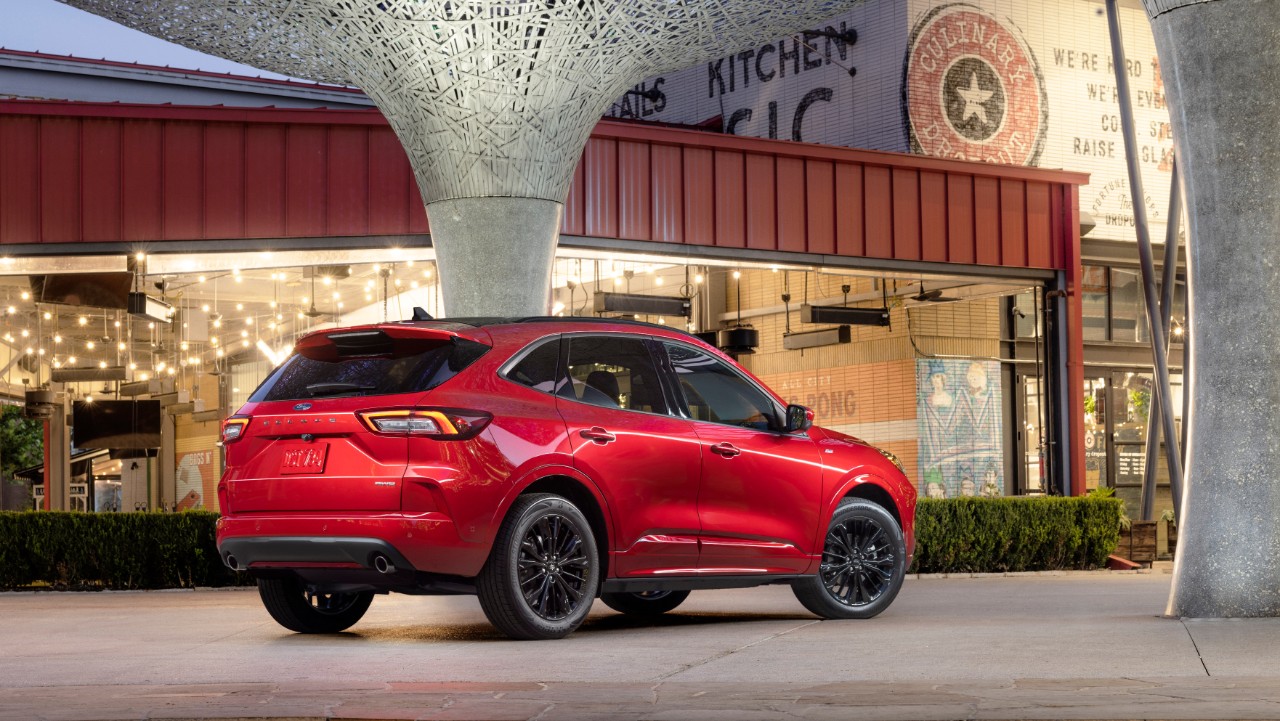
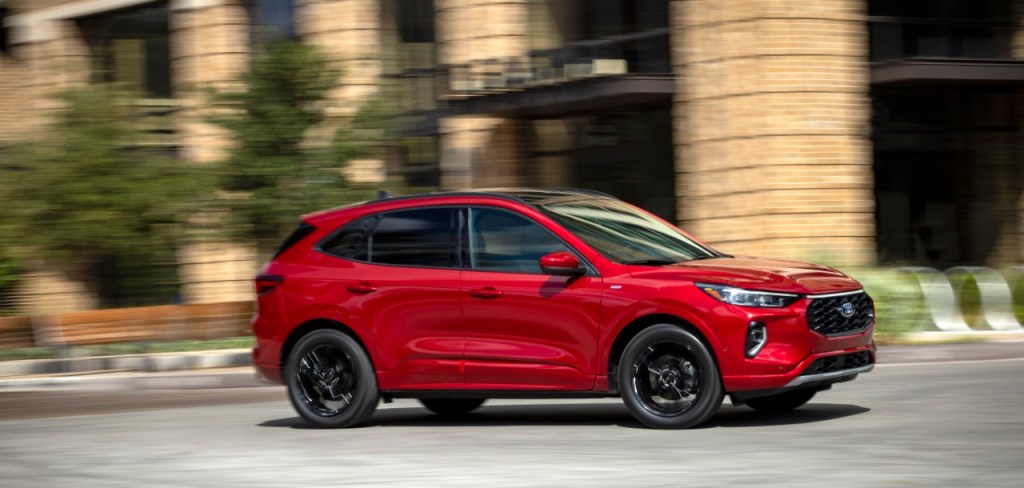
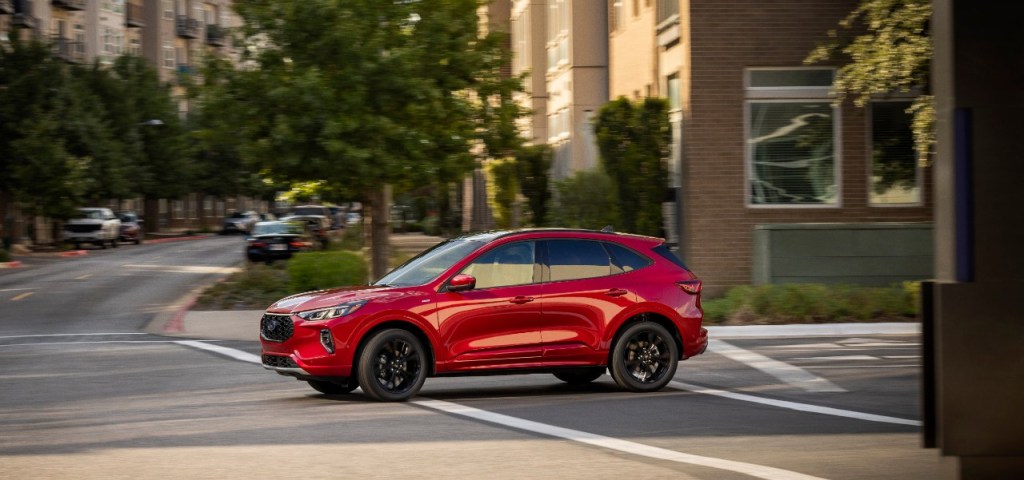
The Ford Escape PHEV (plug-in electric vehicle) received a makeover in 2023 that boasted sharper styling and improved technology. The refreshed exterior has given it a more modern, muscular and appealing look, though not revolutionary. It looks much better but it still won’t stand out in a sea of four-door, five-passenger compact SUVs.
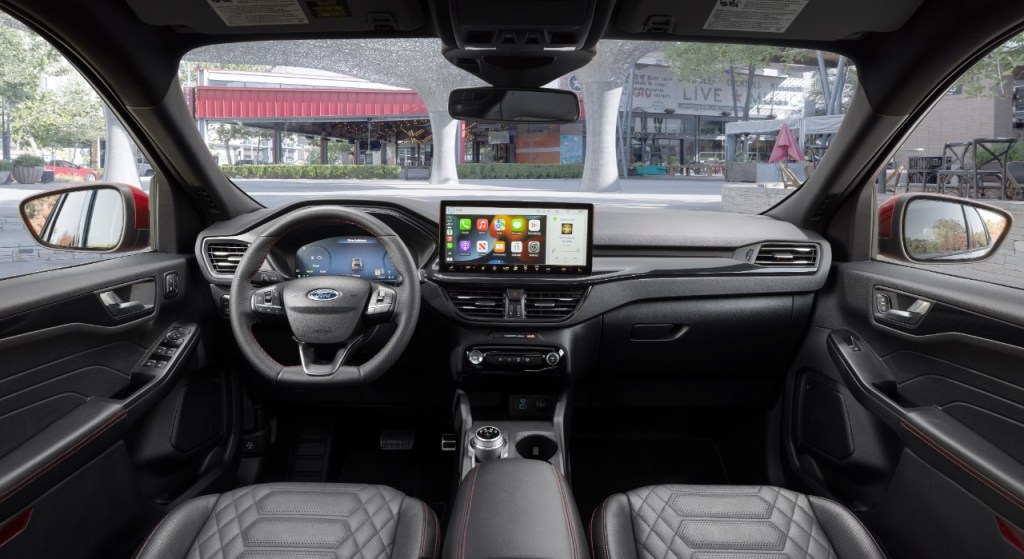
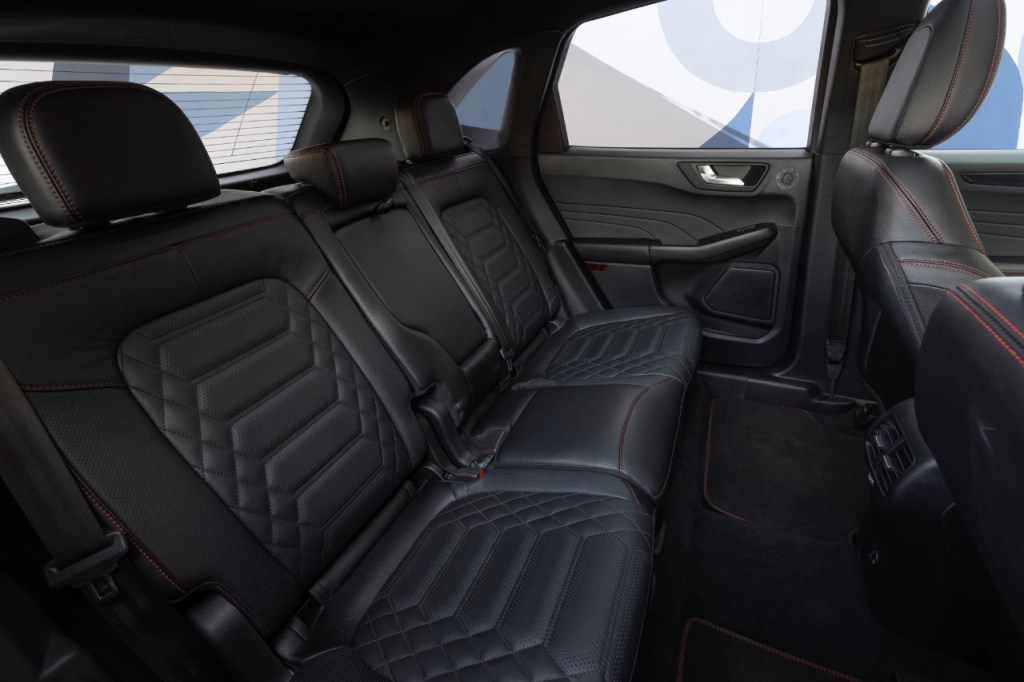
Interior updates included a redesign of the dashboard, consoles, door panels and seats. Kudos to the Ford designers and engineers for making the most of the resources they were given, which in the case of the Escape is mostly plastic.
The panels that span the dashboard, door trim and center console offer an appealing contrast. They are etched, brushed and textured in ways that provide an artistically satisfying contrast and appear upscale. But they are hard plastic nonetheless.
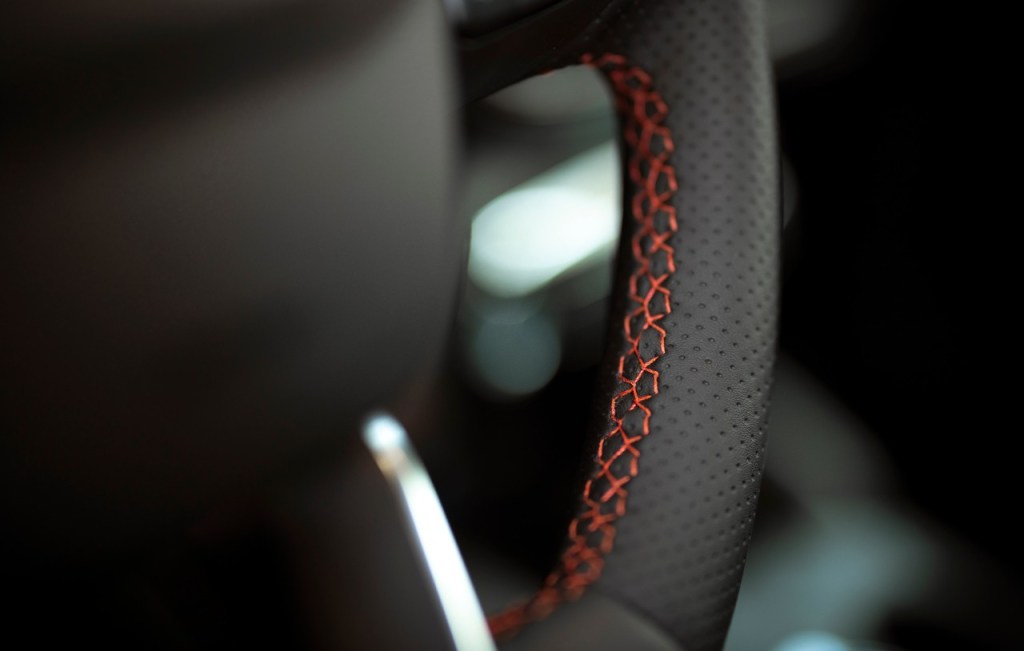
A similar aesthetic applies to the seats. They feature an aggressively attractive pattern, combined with the requisite racing-style stitching. But they feel like the same rubbery vinyl used in economy cars.
Overall, the interior has the look of a high-class Audi, but feels like a rental car.
More contrasts await when you start the car. A warning screen immediately pops up showing which seats are occupied and whether those riders are belted in or not. It could be a fine safety feature, but it alarms every single time you start the car—even when all occupants are properly belted in. The warning requires a button press to clear, or about a minute for it to clear itself.



Other nanny-like warning screens invariably—and unnecessarily—pop up, like one for the pre-collision assist system. Turns out this warning can alert when it’s cold outside and frost develops on the sensor. Again, it requires a button press to clear the warning from the main screen, or it will clear itself after a minute or two. This irksome baby-sitting via warning-screen popups goes on and on, until you feel like the car is constantly screaming at you.
On the road, the Escape drives just fine, with average acceleration, cornering and braking. At highway speeds, some wind noise emanates from the driver side mirror, which gets fatiguing after some time. Otherwise, it’s quiet and unobtrusive.
Another high point is fuel economy, where the Escape leads the competition. The Escape gets 101 MPGe (miles per gallon equivalent) when running on electricity and gasoline combined, easily beating the 94 MPGe posted by the Toyota RAV4 Prime, the second-highest rated in the class.
The Escape PHEV’s 10.7-kWh lithium-ion battery provides an EPA-estimated all-electric driving range of 37 miles, positioning it between the Toyota RAV4 PHEV (42 miles) and the Kia Sportage PHEV (34 miles).
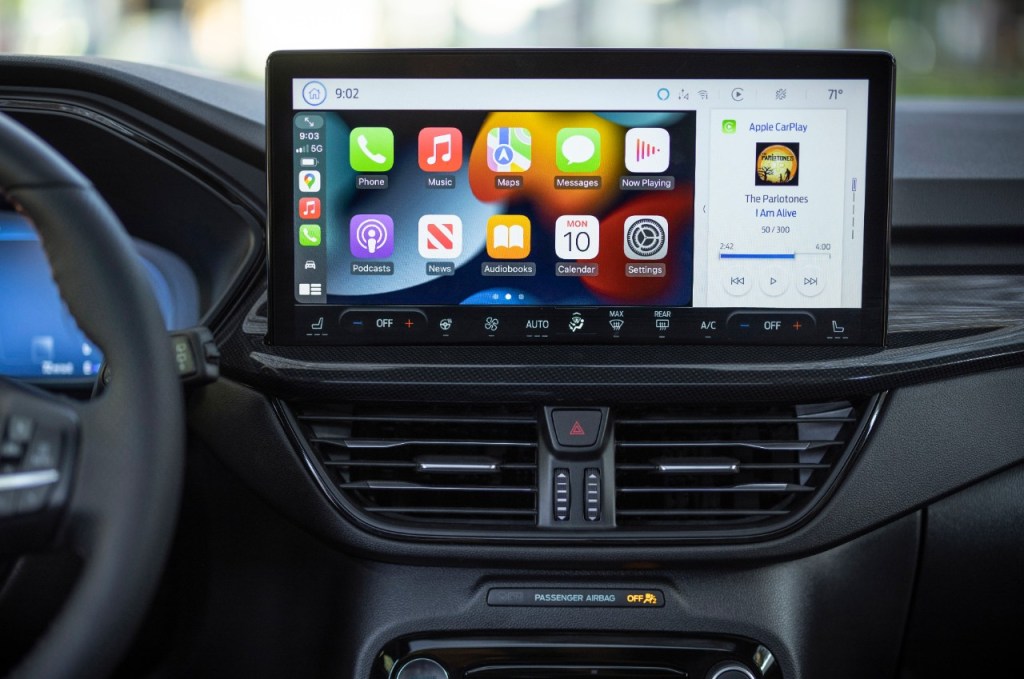
The Escape features a new 13.2-inch touchscreen, making infotainment interactions a bit easier, but not perfect (see below), and includes wireless Apple CarPlay and Android Auto integration.



The Escape offers a comfortable and smooth ride, making it suitable for daily driving around town.
Unfortunately, the lows outweigh the highs.
The Escape cannot be ordered with all-wheel drive. Neither can two other competitors in this segment—the Kia Sportage PHEV and Hyundai Tuscon PHEV. This could be a major drawback for some buyers. To get AWD in a PHEV SUV of this size, you must opt for the Toyota RAV4 Prime, Mitsubishi Outlander or Jeep Wrangler 4xe.
The Escape PHEV’s base price of $39,995 is on the high side of average for this market segment. The Kia Sportage PHEV ($39,590), Hyundai Tuscon PHEV ($38,725) and Mitsubishi Outlander ($37,445), all start out at less. Only the Toyota RAV4 Prime ($43,440) and Jeep Wrangler 4xe ($49,995) have higher starting prices than the Escape.
The tested Escape included $7,120 in options, including metallic paint ($995); $4,530 for the PHEV premium package, which includes reverse brake assist, active parking assist, a 360-degree camera, wireless phone charging, head-up display, and a 10-way power driver’s seat. The panoramic sunroof was $1,595 extra. Including the mandatory $1,495 destination charge, the Escape’s as-tested price was $47,115.
The infotainment system could use some refinement. The lack of physical knobs and buttons means almost every adjustment must be made via the touchscreen. There’s one dedicated knob for the radio volume and two others for the climate control. You also have switches for the parking assist, outside cameras, outside mirrors, door locks, windows, headlights and dashboard dimming. But other than that, all adjustments must be made by the touchscreen, which might be OK if it were laid out better.
After a lot of menu diving, we could not find a really good view that that shows the balance between the electric motor and the gas motor and when each one was working. With no dedicated button for Drive Mode, switching from Sport to Slippery—or any other mode—required menu diving. Change the radio station? More menu diving.


Ford needs to do a serious rethink of its user experience. Just fixing the “back” button, for example, would do wonders. Ford uses different icons for the “back” button depending on which screen you’re on. And it never seems to be in the same place. Its look and location change with the screen you’re on. Sometimes the back button doesn’t work at all, and you must hit the Home screen button and start over. Using different icons and icon placements that perform the same function is just confusing.
The rear seat is fairly roomy, and the rear seats can be reclined, which is a nice touch. But like almost everything with the Escape, they will eventually disappoint. They don’t fold flat, for one thing. They don’t even ramp upward when folded flat like many vehicles in this category. No, laying them flat presents a 3” to 4” tall ledge where the back of the seat folds, which happens to be right in the middle of the cargo area. Good luck trying to slide something in. Cargo must be lifted over this ledge, preventing anything from being slid in completely from the rear.
Another bugaboo was the lane-keep assist. It never worked. We verified it was turned on, set to “alert and aid” with the alert intensity set to high. But it never worked, on backroads or the highway. The test car had 10,700 miles on it.
Then there’s the brake hold function. When in electric mode the brakes hold the vehicle in place, keeping it from inadvertently rolling forward or backward. However, it seems to clamp the brakes too hard. To release the brakes and get the vehicle to move, you must blip the throttle pedal and the brakes will release.
This takes some finesse. In situations like parking garages where things are tight, you can easily blip the throttle too hard and the brakes release suddenly, launching the vehicle faster than you expected—a recipe for disaster in tight confines.
Overall, the Escape just doesn’t feel like a $47,000 vehicle. Yes, the electric drive system works great, and you can get 35 miles plus of electric-only range. But the competition can do this, too, and with much less frustration.
Make sure to check out the Toyota RAV4 Prime PHEV, The Kia Sportage Plug-In Hybrid, Hyundai Tucson Plug-In Hybrid, and the Mitsubishi Outlander. Ford has made some improvements with the 2023 Ford Escape PHEV, but it still struggles to stand out in this competitive plug-in hybrid class.
Specifications
- Model: 2023 Ford Escape plug-in hybrid
- Type: Four-door, front wheel drive, five-passenger small SUV.
- Engine: 2.5-liter, inline four-cylinder gasoline engine, electric motor with a 10.7-kWh lithium-ion battery pack, together providing 210 horsepower.
- Transmission: Automatic electronic continuously variable transmission (CVT).
- Dimensions: length: 15 feet; width: 6 feet (excluding side mirrors); height: 6 feet, 3 inches.
- Passenger volume: 102.2 cubic feet; cargo volume behind first row: 65.4 cubic feet; cargo volume behind second row: 37.5 cubic feet.
- Weight: 3,904 pounds.
- Towing capability: up to 1,500 pounds when properly equipped.
- EPA fuel consumption: 101 MPGe (miles per gallon equivalent) when running on electricity and gasoline combined; Approximately 40 MPG combined when relying solely on gasoline.
- Base price, including $1,495 destination charge: $39,995.
- Price as tested: $47,115.
Disclaimer: The manufacturer provided the vehicle used to conduct this test drive and review. Photos ©Ford
 Frank A. Aukofer
 Jason Fogelson
 Matthew P. Aukofer
 Tod Mesirow
 The Review Garage
April 8, 2024 at 4:24 pm
I have the 2023 Escape PHEV and wouldn’t trade it for all the Toyota equivalents. Nor any of the others mentioned in the article.
LikeLike
April 9, 2024 at 10:16 am
Thanks, Terry. It’s good to hear another perspective. Maybe we got a lemon. The test car did seem to need a reset given the lane keep assist wasn’t functioning.
LikeLike