

~ A DriveWays Review ~
by Frank A. Aukofer
Like a small but important piece in a jigsaw puzzle, the 2024 Subaru Crosstrek Wilderness crossover sport utility vehicle fits neatly into the Japanese manufacturer’s lineup.
Dating back about a dozen years, the Crosstrek follows Subaru’s blueprint of delivering vehicles with all-wheel drive, powered by horizontally opposed engines, also call boxer, or flat, engines. In a boxer, the cylinders lie flat, feet to feet, on both sides of the crankshaft, instead of leaning or standing up as in V or inline engines.
The boxer configuration delivers a lower center of gravity to enhance handling, and has proven reliability. Volkswagen used boxers, air-cooled, in its Beetle models, which racked up 22.7 million sales from introduction in the 1930s to the Beetle’s end in the mid-1970s.
Subaru took up the cudgel with its own liquid cooled design and now remains as the only manufacturer that uses boxer engines in all of its cars. They offer all-wheel drive standard except for the BRZ sports car, which comes with rear-wheel drive. The BRZ, a joint venture, is nearly identical to the Toyota GR86.


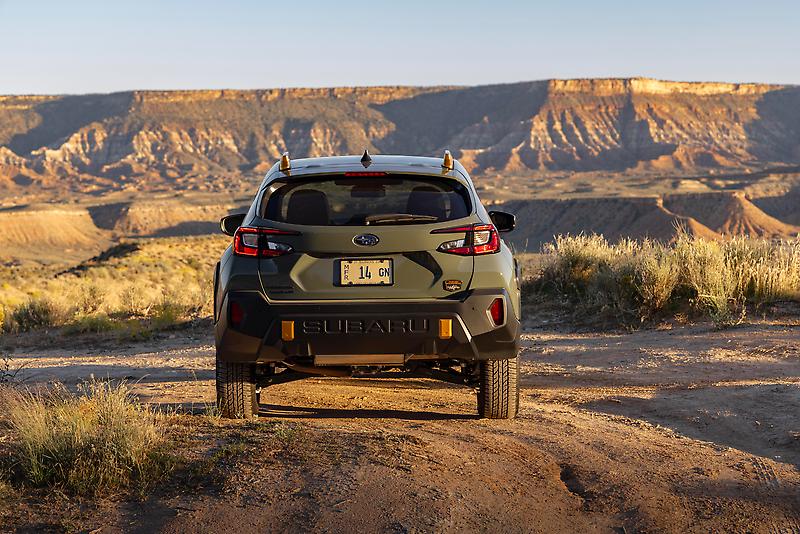

The compact Subaru Crosstrek Wilderness slots between the larger Forester and the smaller Impreza hatchback. It is powered by a 2.5-liter boxer engine that makes 182 horsepower and 178 pound-feet of torque, or twisting force. It enables zero-to-60 miles an hour acceleration in about eight seconds.
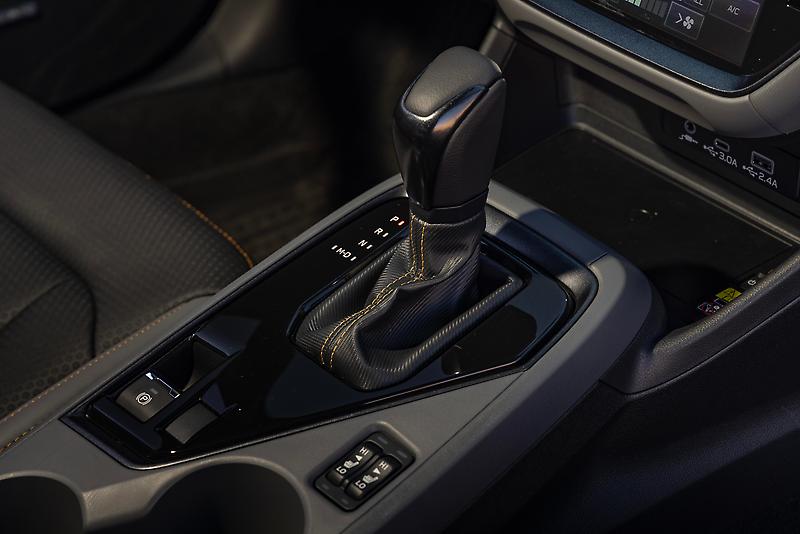
Power makes its way to the pavement via a continuously variable automatic transmission, a design that uses a combination of belts and pulleys to multiply engine power during acceleration. Though smooth because there are no shift points, CVTs are sometimes criticized for sounding and feeling as if they are over-revving or slipping. The Wilderness is tight.
Early reports indicate that the strong suit of the Wilderness is its off-road performance, with mountain goat capabilities in rough terrain. Among other off-road enhancements, it is equipped with an aluminum skid plate to protect components. One criticism is that, unlike other vehicles, it does not feature a front-facing camera, though there is one for reversing.
Off-roading also is enhanced by 9.3 inches of ground clearance, enabled by a revised suspension system with taller springs.

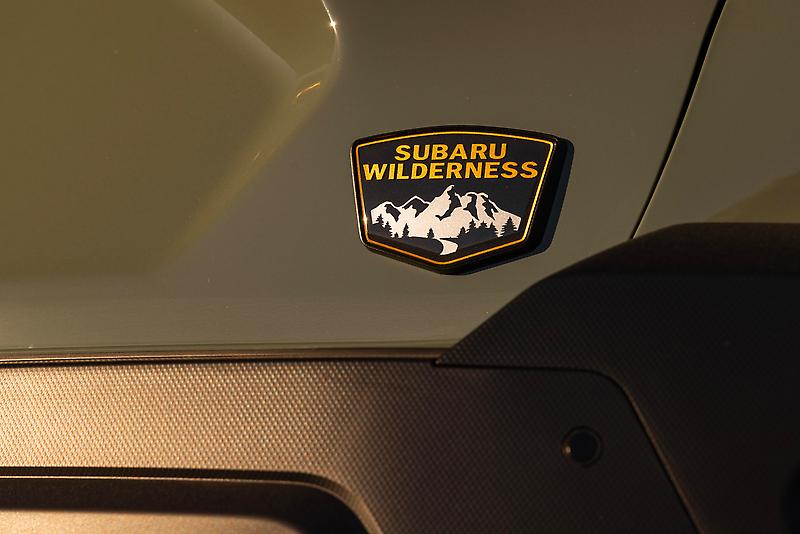


The Crosstrek Wilderness is a standout with exterior styling that means it can easily be identified in a parking lot. The tester had vivid blue paint set off by shiny copper-colored accents and a black matte hood that eliminated reflective glare. There’s also a Wilderness-specific grille and bumpers, black-finished badges, window trim and headlight bezels.
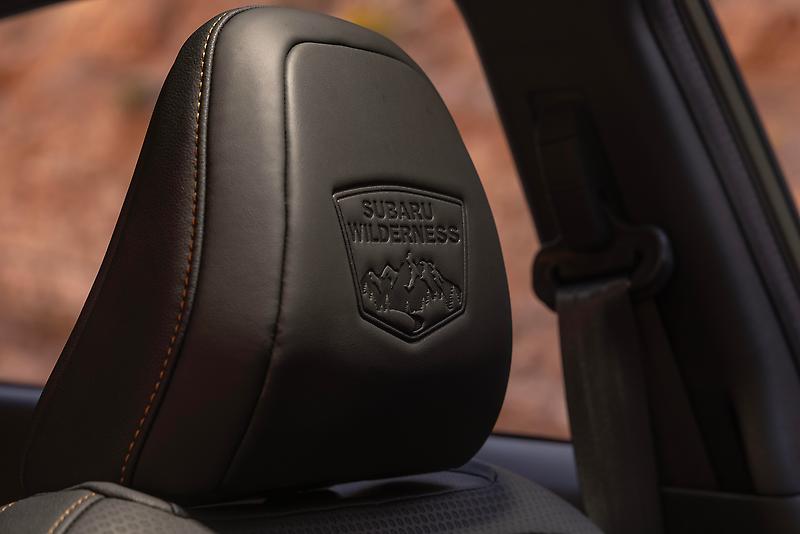
The copper visuals carried through to the interior, which featured copper-colored accents and stitching, Subaru’s Star-Tex water repellant upholstery, gray trim, and black headliner.
For a vehicle that is decently priced, the Crosstrek Wilderness is uncommonly well equipped. The base price, including the destination charge, is $33,290. With options, the test vehicle came with a bottom-line price of $33,290.
The only option was a $2,270 package that included a power glass moon roof, 10-way power driver’s seat with two-way lumbar support, and 10-speaker Harman Kardon audio system with 432-watt equivalent amplifier.
Standard equipment on the tester included dual-zone automatic climate control, all-terrain tires, blind-spot detection with lane-change assist and rear cross-traffic alert, LED exterior lights, hill descent control, reminder to check rear seat when exiting, and tire-pressure monitoring.
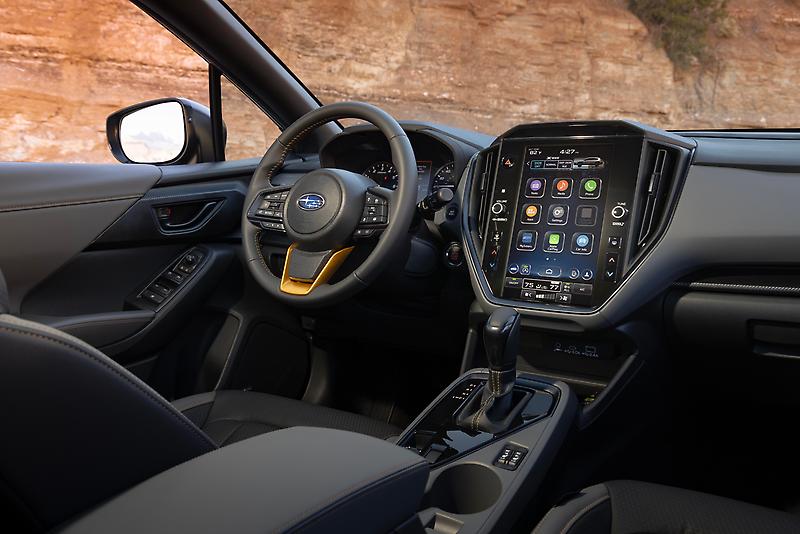



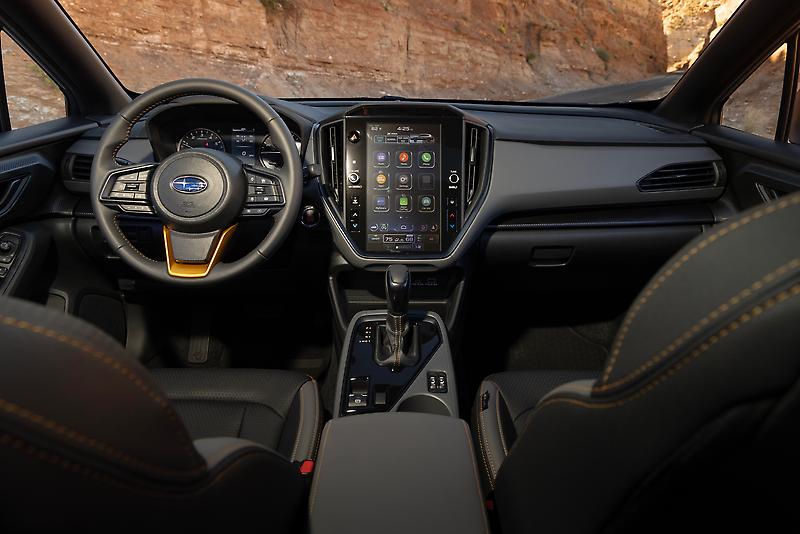
Also standard was Subaru’s Eye Sight driver assist technology, and a modern infotainment system that includes Apple Car Play and Android Auto. Eye Sight monitors traffic, warns if you drive out of your lane, and fine tunes cruise control. Subaru says the system has been found to reduce rear-end crashes with injuries by up to 85%.
Its pre-collision system can apply full braking force in emergency situations.
The Crosstrek Wilderness stretches 14 feet 8 inches from bumper to bumper and is 5 feet 4 inches tall. There’s a total of 119 cubic feet of interior space, divided into 99 for passengers and 20 behind the rear seat for cargo. If it were a car, its interior space would put it at the threshold of the large category, though the EPA classifies it as a small SUV. This Subaru seats five in comfort except for the center-rear passenger, who gets squeezed a bit.
Except for a muted engine drone, the Wilderness cruises quietly at freeway speeds and delivers a controlled and comfortable ride on all but badly pockmarked surfaces.
City/highway/combined fuel consumption is rated by the Environmental Protection Agency at 25/29/27 miles to the gallon.
Specifications
- Model: 2024 Subaru Crosstrek Wilderness four-door crossover sport utility vehicle.
- Engine: 2.5-liter horizontally-opposed four-cylinder; 182 hp, 178 lb-ft torque.
- Transmission: Continuously variable automatic, all-wheel drive.
- Overall length: 14 feet 8 inches.
- Height: 5 feet 4 inches.
- EPA/SAE passenger/cargo volume: 99/20 cubic feet.
- Weight: 3,369 pounds.
- Towing capability: 3,500 pounds.
- Ground clearance: 9.3 inches.
- EPA city/highway/combined fuel consumption: 25/29/27 mpg.
- Base price, Including destination charge: $33,290.
- Price as tested: $35,560.
Disclaimer: The manufacturer provided the vehicle used to conduct this test drive and review. Photos ©Subaru
 Frank A. Aukofer
 Jason Fogelson
 Matthew P. Aukofer
 Tod Mesirow
 The Review Garage
Leave a comment