

~ A DriveWays Review ~
by Frank A. Aukofer
For more than a century, the Hornet name has found its way onto automobiles, no doubt in an effort by manufacturers in various countries to persuade buyers that their vehicles embodied high performance and aggressive behavior.
Now, after a hiatus of more than 45 years, the name returns on a plug-in hybrid compact crossover sport utility with all-wheel drive, a Dodge nameplate and an Italian accent.
In modern times, the most famous Hornet was a powerful Hudson that excelled in stock racing in the early 1950s. Later, in the 1970s, the Hornet name was attached to a model from American Motors Corp., which had absorbed Hudson.
Now they all are part of Stellantis, a European conglomerate that controls 16 world automotive brands, including Abarth, Alfa Romeo, Peugeot, Chrysler, Citroën, Dodge, DS, Fiat, Fiat Professional, Jeep, Lancia, Maserati, Mopar, Opel, Ram and Vauxhall.
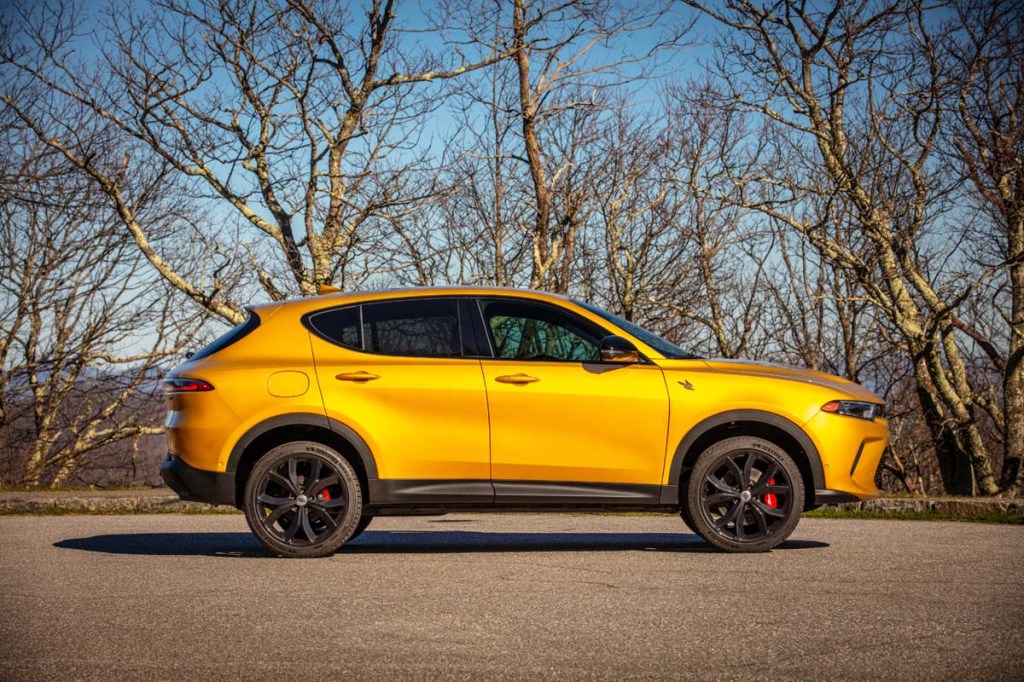


A lineup like that allows for cross-fertilization, and that’s exactly what happened with the Dodge Hornet, which is a fraternal twin of the all-new Alfa Romeo Tonale. (The name is Italian for “Tonal”).
The Alfa, however, is single minded. It mimics the tested Hornet R/T model, which is a plug-in hybrid, or PHEV, crossover sport utility vehicle with all-wheel drive that combines a 1.3-liter four-cylinder gasoline engine with an electric motor and a six-speed automatic transmission. The combination makes 288 horsepower and 383 pound-feet of torque, enough to propel the two-ton vehicle to 60 miles an hour in the five second range.
That performance comes if the driver uses the R/T’s PowerShot mode, which is reminiscent of the Boost mode in the electric Genesis GV70 from South Korea. A touch of a button on the GV70s steering wheel shoots an extra 54 horsepower to the wheels for an acceleration surge at any speed. The Hornet’s hybrid system, operated by pulling both paddle shifters, is not as stout but delivers some of the same feel.
The Hornet also comes in a toned-down trim, the GT, which is powered by a 268-horsepower, 2.0-liter four-cylinder engine with all-wheel drive and a nine-speed automatic transmission.
Dodge does not publish the cubic feet of passenger space in the Hornet R/T, though it is commonly viewed as a compact crossover, somewhat in the same category as a Honda CR-V or Toyota RAV4. Cargo space behind the R/T/’s back seat is 23 cubic feet, which expands to 51 cubic feet with the seatbacks folded.
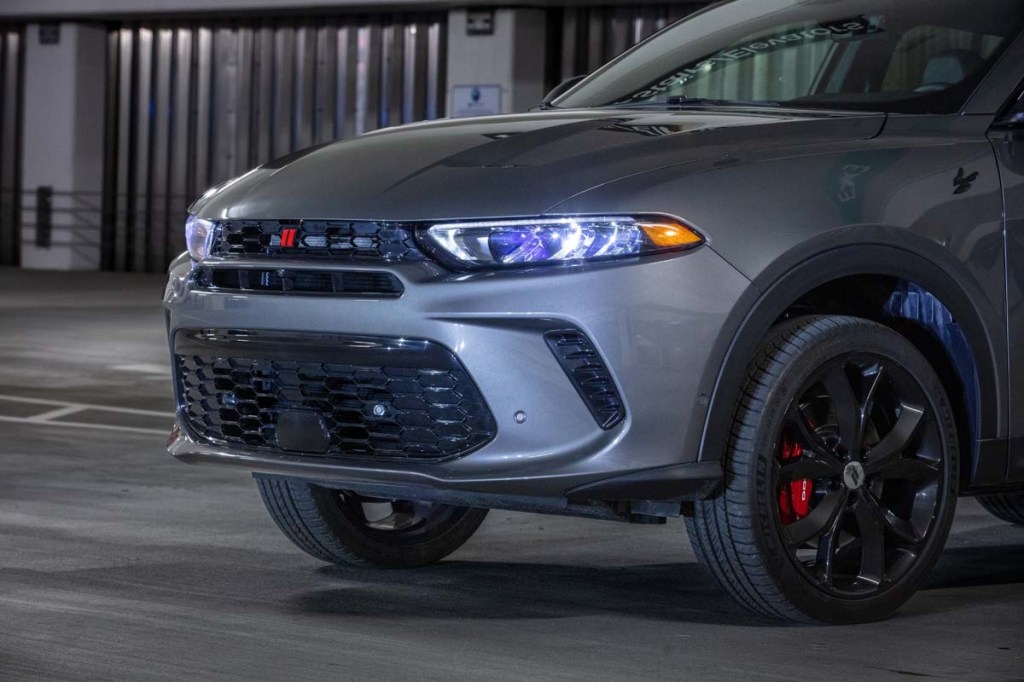
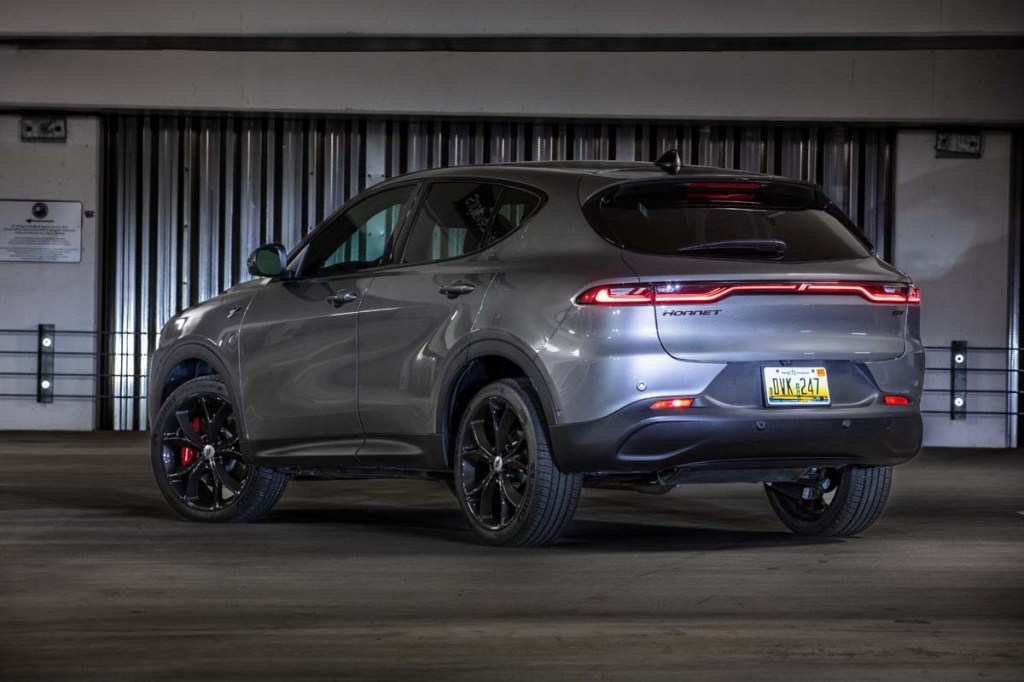

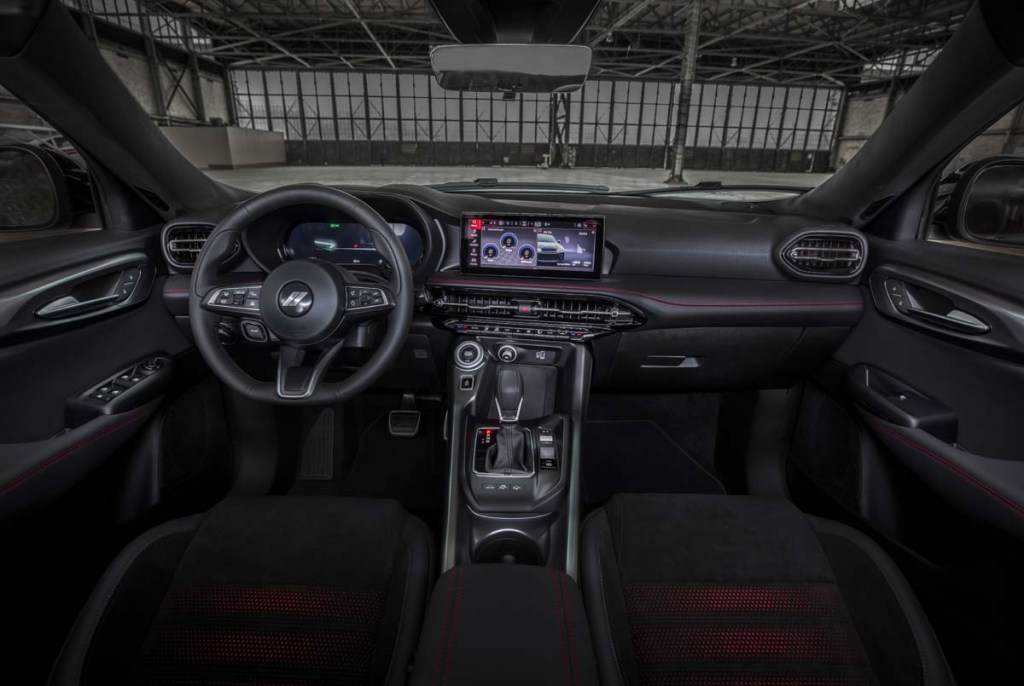
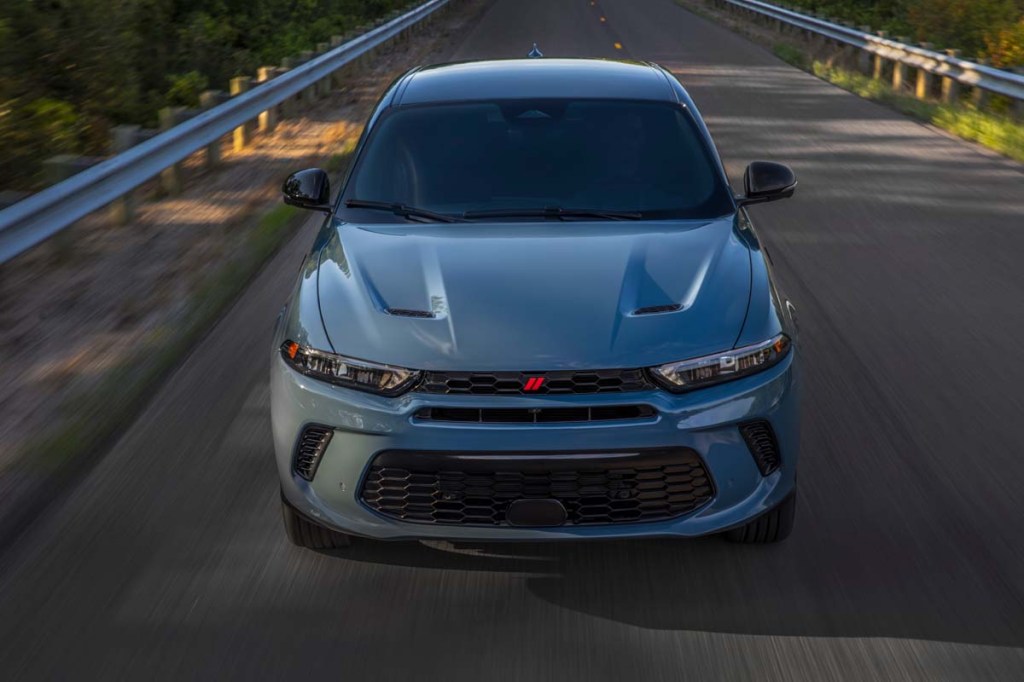
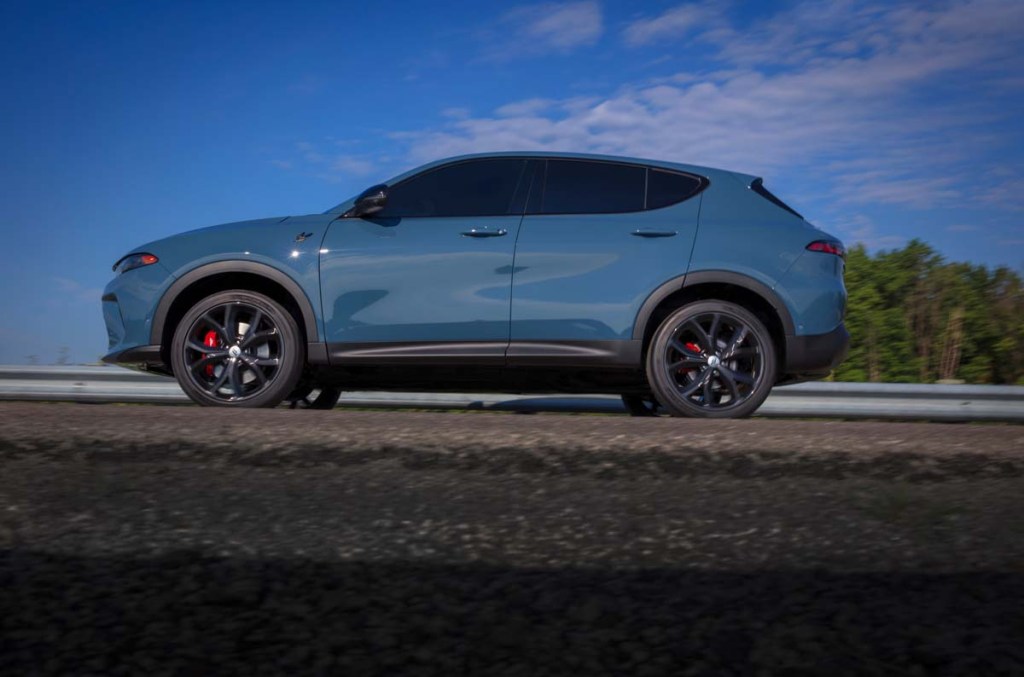
Despite its jacked-up station wagon look, the tester was a stylish vehicle with dull “Gray Cray” paint accented by 10-spoke shiny black alloy wheels. Inside, driver and passengers were treated to black faux suede and leather trimmed seats with orange see-through accents. The combination of grippy suede and prominent bolsters keeps the driver comfortably anchored in cornering.
Outboard back seats deliver ample head and knee room, also with bolstered seatbacks. The fifth center-rear position, however, validates what is becoming a cliché, with hard cushions and space limited by a floor hump and intrusion of the front console.
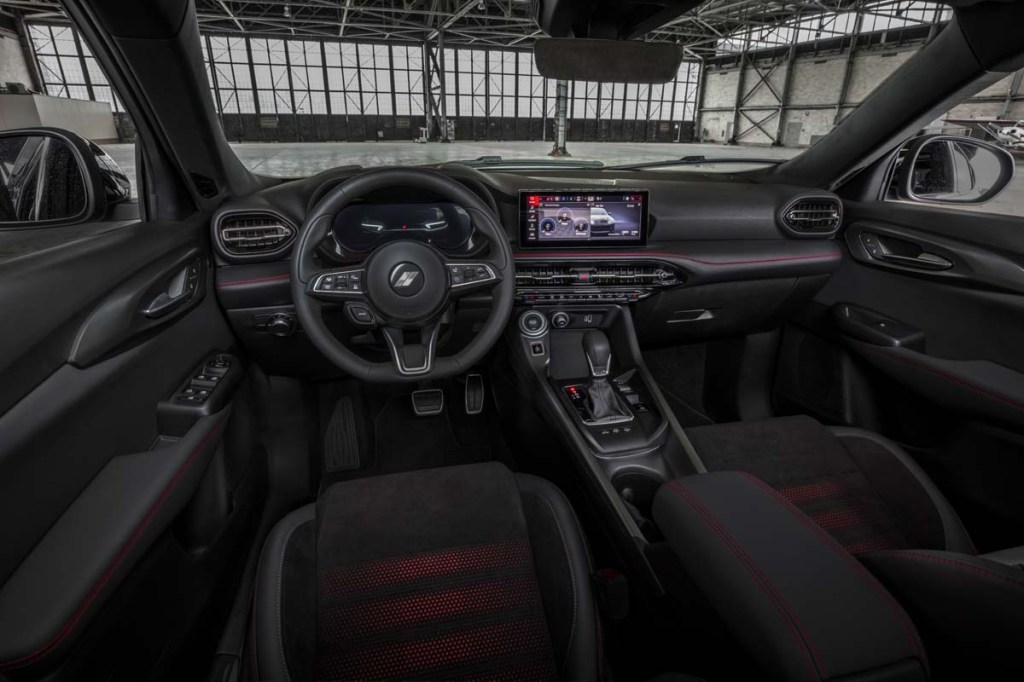
From the driver’s seat, the instruments and center screen easily handle motoring and infotainment functions, abetted by a row of buttons. They include selections of three drive modes: hybrid, electric and E-Save. The last basically allows the gasoline engine to take over. Paddles more than seven inches long mounted on the steering column enable the driver to manually shift the six-speed automatic transmission.
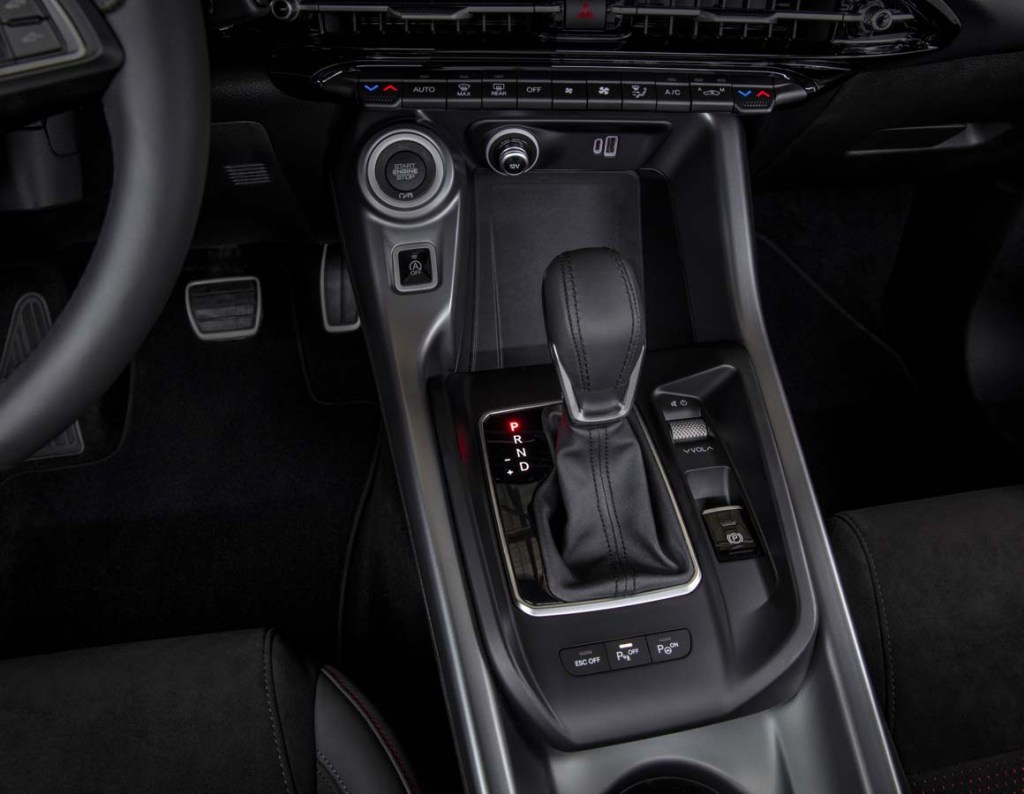
In purely electric mode, the manufacturer estimates that the Hornet R/T can cover up to 32 miles—perhaps enough for daily chasing around. Overall range in hybrid operation is rated at 360 miles on regular gasoline. Charging time on a home two-level charger is 2.5 hours. The R/T comes commendably equipped, with an independent suspension system aided by Koni performance shock absorbers, and a driver assist system with adaptive cruise control and lane centering. Standard safety equipment includes automatic emergency braking with pedestrian and cyclist detection, and lane-departure warning with lane-keeping assist.
In daily driving, this Hornet belies its namesake. It is a quiet, agreeable daily servant with no annoying traits, and distance-driving comfort and performance that easily melds with traffic. The stinger came with the starting price of $46,590, including the destination charge, and a bottom-line sticker price, with options, of $52,305.

Specifications
- Model: 2024 Dodge Hornet R/T Plus PHEV four-door crossover sport utility vehicle.
- Engine/motor:1.3-liter four-cylinder gasoline; one electric motor; combined output 288 hp, 383 lb-ft torque.
- Transmission: Six-speed automatic with manual shift mode and all-wheel drive.
- Overall length: 14 feet 10 inches.
- Height: 5 feet 3 inches.
- EPA/SAE cargo volume: 23 cubic feet; 51 cubic feet rear seatbacks folded.
- Weight: 4,140 pounds.
- Towing capability: 2,000 pounds.
- EPA city/highway/combined fuel consumption: 23/29/26 mpg.
- Range: 360 miles. Range on electric power only: 32 miles.
- Charging time: 2.5 hours on level two charger.
- Base price, including destination charge: $46,590.
- Price as tested: $52,305.
Disclaimer: The manufacturer provided the vehicle used to conduct this test drive and review. Photos ©Stellantis
 Frank A. Aukofer
 Jason Fogelson
 Matthew P. Aukofer
 Tod Mesirow
 The Review Garage
Leave a comment