

~ A DriveWays Review ~
by Frank A. Aukofer
Whenever a manufacturer introduces a newly designed model like the 2023 Toyota Prius Prime XSE Premium plug-in hybrid, the first-look reaction of expert witnesses, no matter if they are designers, engineers, marketers, journalists or customers, seems always the same.
“It looks great.” “I love the lines.” “Beautiful interior.” “Anyone would want to be seen in it.” Or: “They really messed up on that one.”
Those are samples of some of the comments. But inevitably the focus is on styling and design. Ride, handling, braking and other performance measures take a back seat until later, when reviewers and critics dissect the newbie.
That’s the case with the tested all-new Toyota Prius Prime XSE Premium PHEV, longer and lower than its predecessor, with streamlining that would do justice to a luxury sedan costing four times as much as its bottom-line sticker price of $42,510.
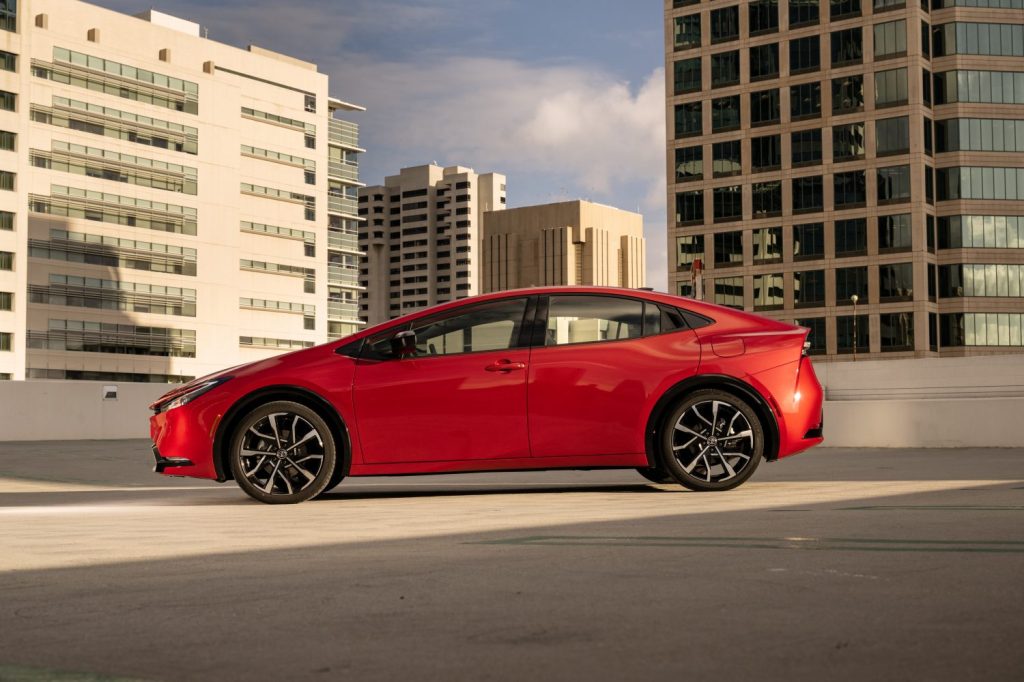

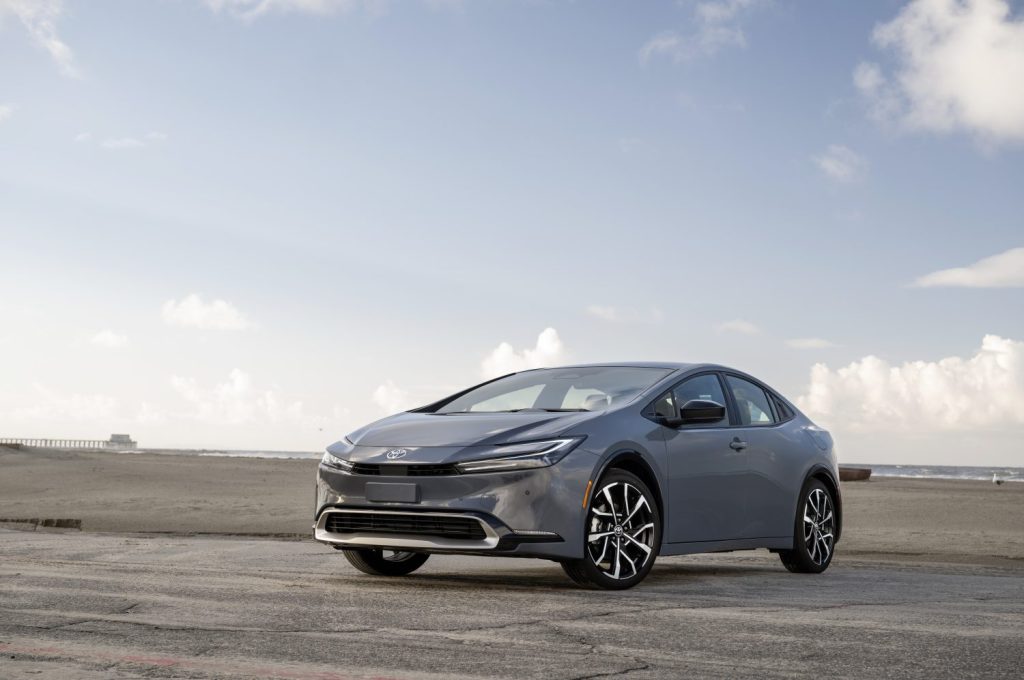

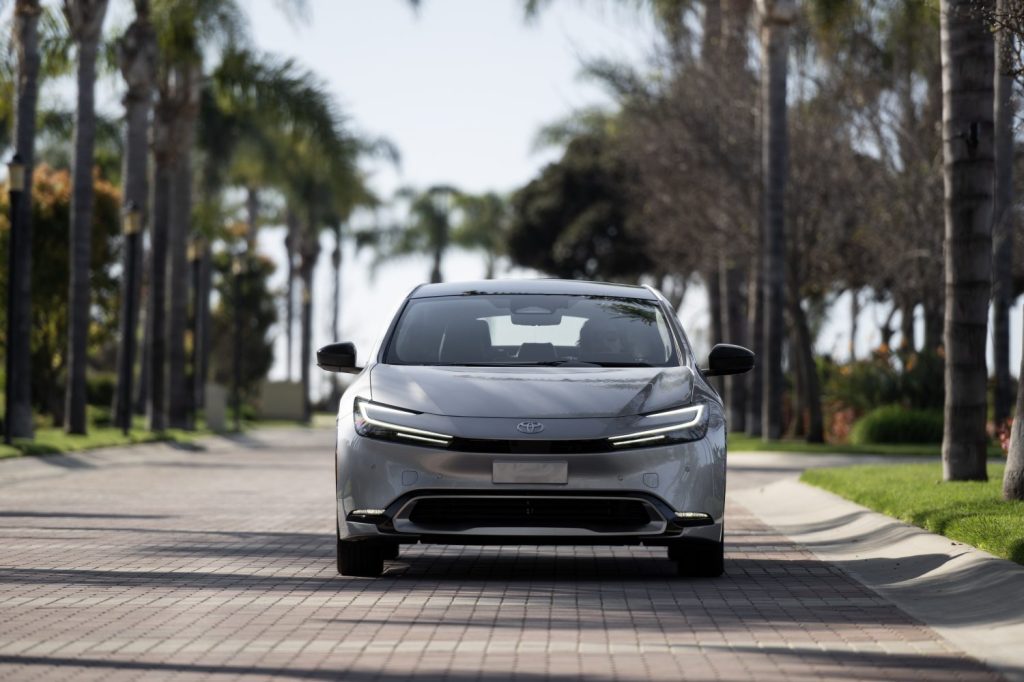
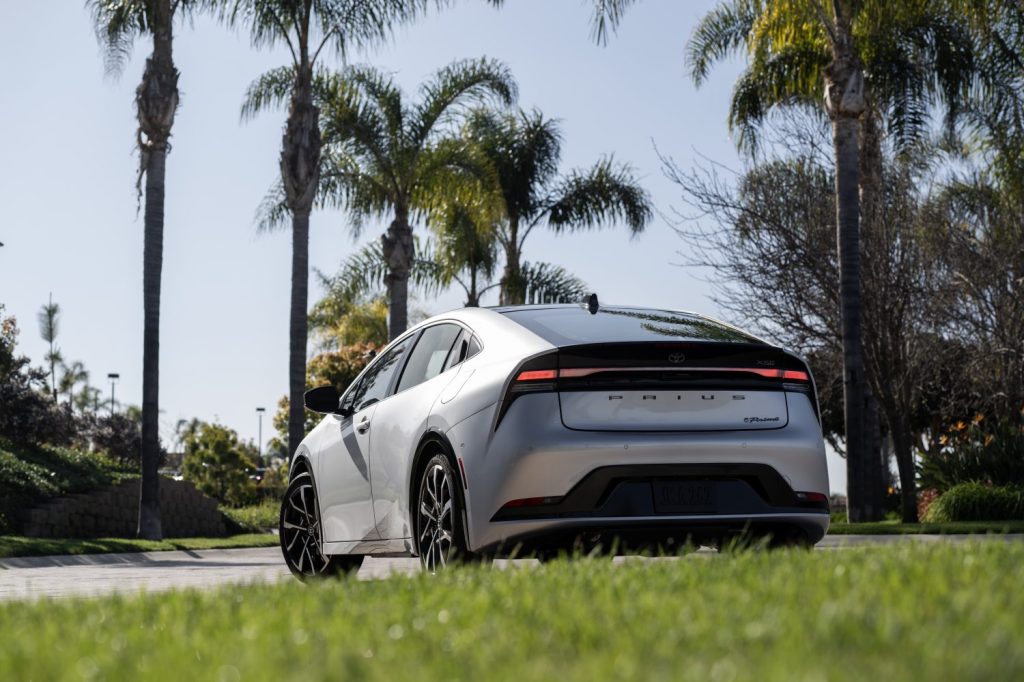
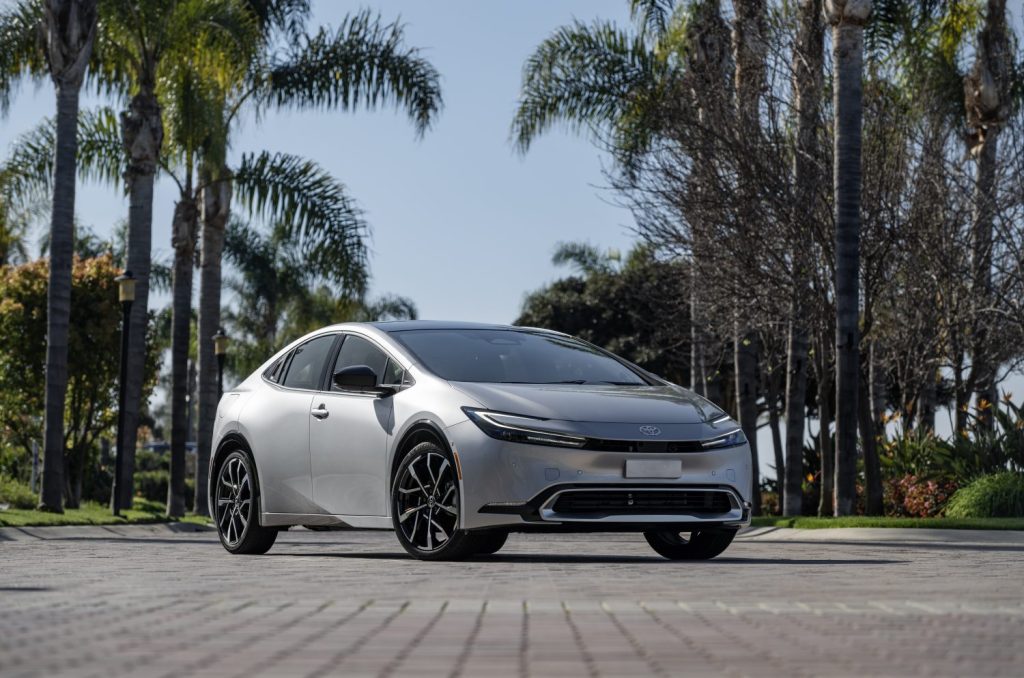
In profile, the lines flow in a delicate arch from bumper to bumper, with a sharply slanted windshield and backlight, and stylishly integrated grille, headlights and taillights. A Car and Driver critic wrote that it “sheds its prior ugly-duckling design and becomes a proverbial swan.” Mate all of that with Toyota’s reputation for building vehicles with durability and longevity, and it looks like a bright future for the Prius Prime.
Moreover, the Prius Prime is a PHEV, short for “plug-in hybrid electric vehicle.” That fits with Toyota’s expertise and leadership in gasoline-electric hybrids. The company has sold more than 15 million hybrids since the introduction of the first Prius in 1997.
Previously, this DriveWays review column has not recommended plug-in hybrids, mainly because of their higher cost over standard hybrids, as well as their short electric-only range. The latter has persuaded some owners of PHEVs to drive their vehicles as if they were standard hybrids, never bothering to plug them in.
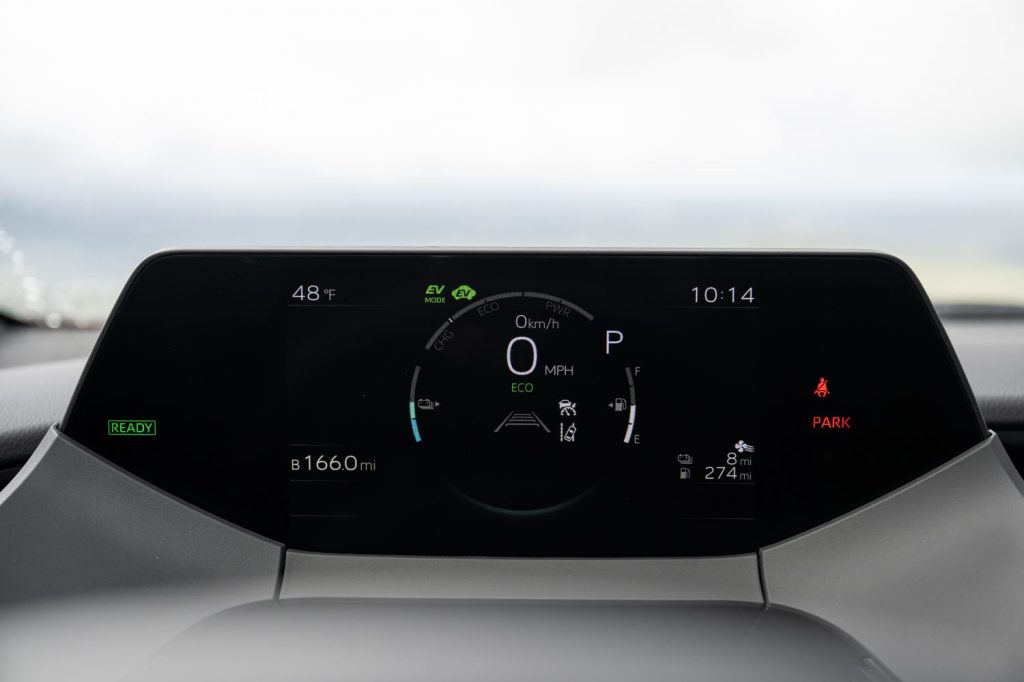
But the new Prius Prime mitigates much of the objections. The tested XSE Premium has an advertised range of 39 miles on purely electric power, with a combined miles per gallon equivalent rating by the Environmental Protection Agency of 114 MPGe. It means that some owners likely will only have to gas up infrequently or not at all.
The tested Prime XSE Premium, despite its low roofline, easily accommodates four passengers in comfort, with plenty of head and knee room. Only the center-rear fifth passenger, as usual, gets disrespected with a higher seating position and intrusion of a floor hump and the front-center console.
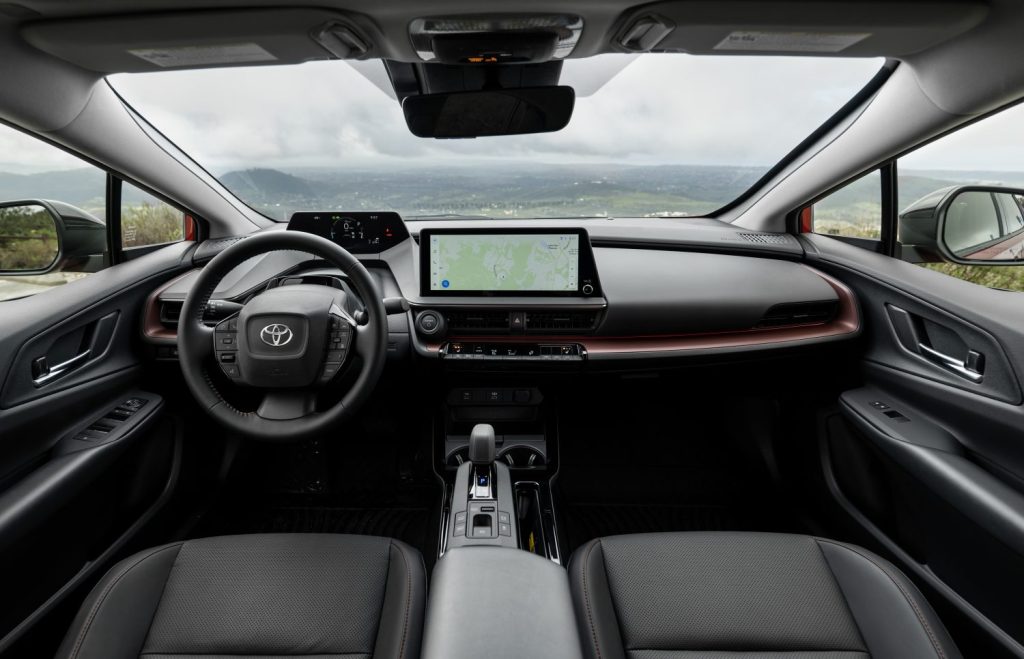


There’s a total of 118 cubic feet of space, divided between 92 cubic feet for passengers and 20 cubic feet for cargo under the rear hatch. That puts the tester in the EPA’s mid-size class.
The Prius Prime gets its power from a 160-horsepower, 2.0-liter four-cylinder engine that delivers 139 pound-feet of torque, or twisting force. It is boosted by two electric motors with a combined 220 horsepower. Toyota does not publish torque numbers for the overall system.
One of the electrics controls a planetary gear set that mimics a continuously variable automatic transmission (CVT), which multiplies engine power without shift points. The combination enables a hiccup-free zero-to-60 miles an hour acceleration time in the six-second range. All the power goes to the front wheels; Toyota may offer all-wheel drive later.
On the tested XSE premium, front and rear automatic emergency braking with pedestrian detection, adaptive cruise control and blind-spot monitoring are part of the safety equipment, which also includes front and rear cross-traffic alerts, lane-changing assist, and safe exit assist.
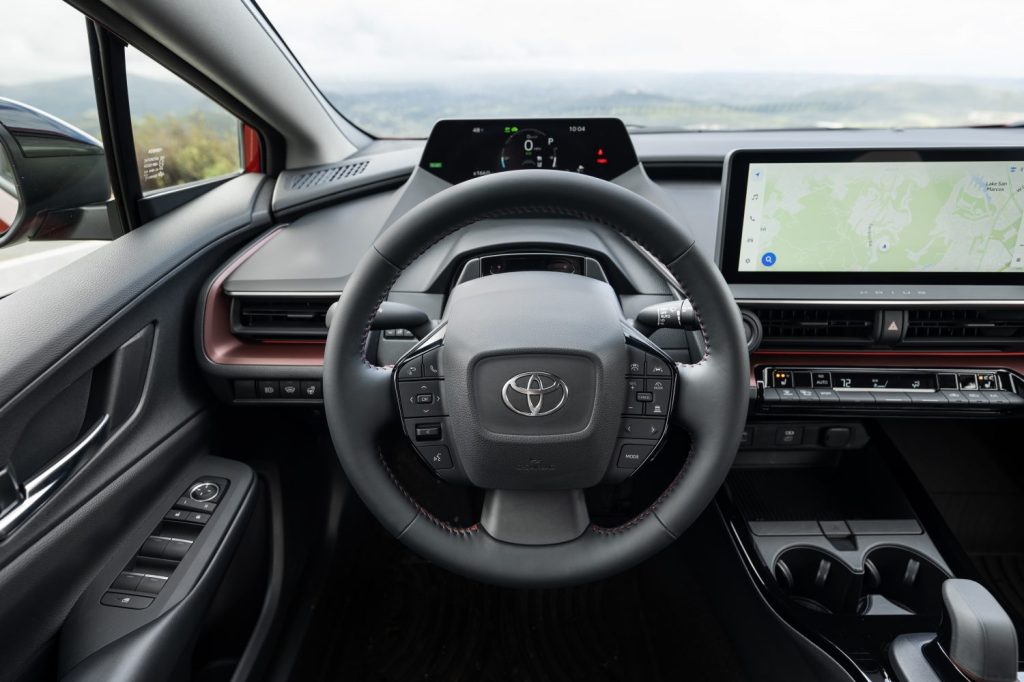
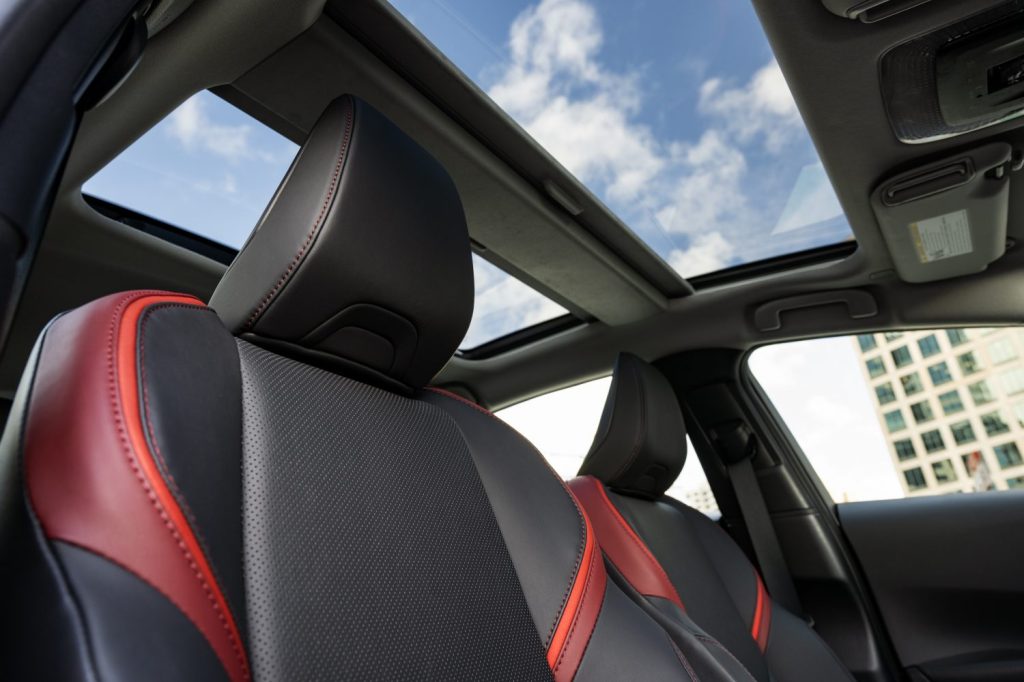
Inside, driver and passengers in the XSE Premium sit on comfortable and supportive seats covered in perforated Softex leatherette. A 12.3-inch center screen delivers infotainment functions, including SXM satellite radio, wireless Apple Car Play and Android Auto, and an upscale JBL audio with eight speakers.
In addition, the interior features automatic headlight high beams, blind-spot monitor, auto-dimming inside mirror, heated steering wheel, heated and ventilated power front seats with memory and adjustable lumbar support, wireless cell phone charger, six USB ports, a fixed-glass sunroof and power tailgate.
In around-town driving, the Prius Prime is a frisky critter with sharp handling. It also cruises easily on Interstates with ample power for passing. Its only minor drawback is that it needs better insulation to mute road noise on rough surfaces.
Specifications
- Model: 2023 Toyota Prius Prime XSE Premium plug-in hybrid (PHEV) four-door hatchback.
- Engine/motors: 2.0-liter four-cylinder gasoline, 160 hp, 139 lb-ft torque; two electric motors, combined output 220 hp; 10.9 kWh lithium-ion battery pack.
- Transmission: Continuously variable automatic (CVT) with front-wheel drive.
- Overall length: 15 feet 1 inch.
- Height: 4 feet 8 inches.
- EPA/SAE passenger/cargo volume: 92/20 cubic feet.
- Weight: 3,572 pounds.
- Towing capability: 1,600 pounds.
- EPA city/highway/combined miles per gallon equivalent: 114 MPGe electricity and gasoline; combined 48 MPG gasoline only.
- All-electric range: 0-39 miles.
- Base price, including destination charge: $40,265.
- Price as tested: $42,510.
Disclaimer: The manufacturer provided the vehicle used to conduct this test drive and review. Photos ©Toyota
 Frank A. Aukofer
 Jason Fogelson
 Matthew P. Aukofer
 Tod Mesirow
 The Review Garage
Leave a comment