
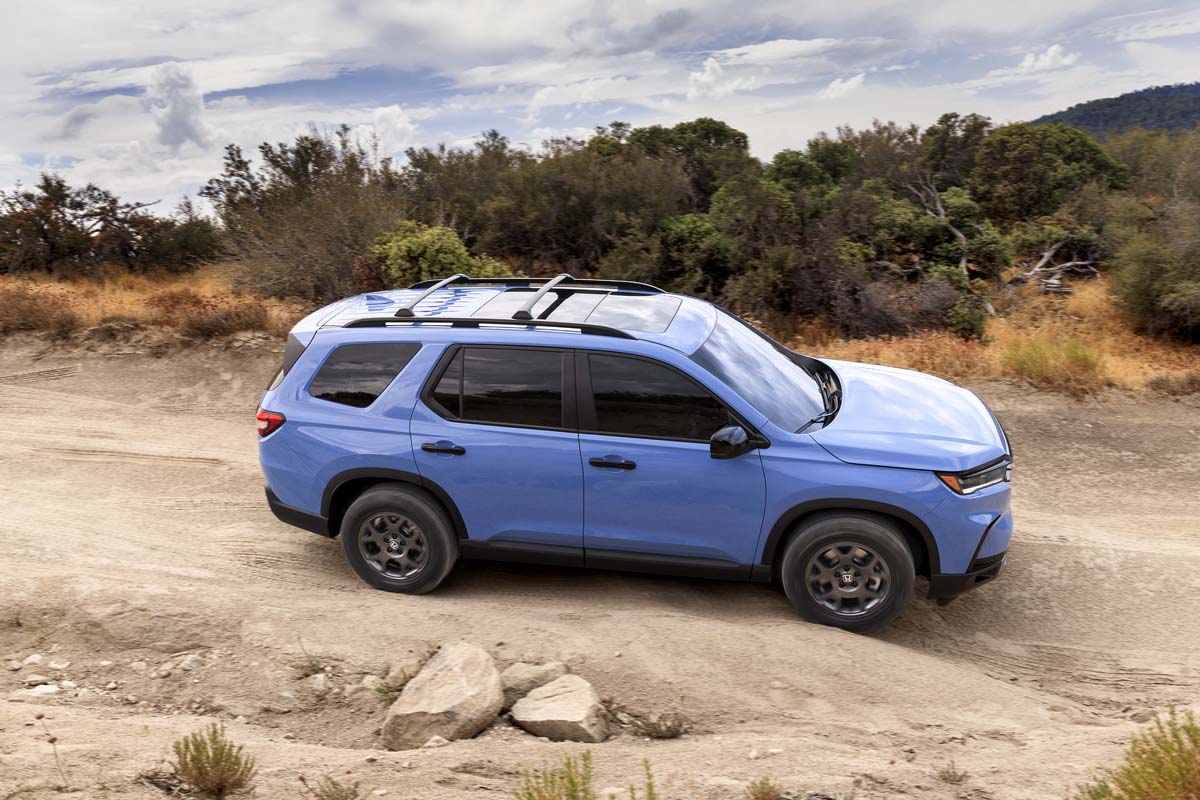
~ A DriveWays Review ~
by Frank A. Aukofer
For at least half a century, Japan’s Honda has delivered quality products in America, including lawn mowers, outboard motors, generators and automobiles, trucks and sport utility vehicles.
So when the company rolled out the all-new 2023 model, it attracted attention to the Pilot as “our largest, most powerful and capable SUV ever,” with a 3.5-liter V6 engine that makes 285 horsepower and 262 pound-feet of torque.
Now in its 20th year, the Pilot is not a new model. Yet it is part of why Honda finished 2022 as the No. 4 retail brand in the United States. The 2023 Pilot, which is built around the same basic architecture as the Odyssey minivan, Passport SUV and the Ridgeline pickup truck, should help retain the distinction.
Tested for this review was the TrailSport, one of five versions, called trim levels, and comes standard with a sophisticated “torque vectoring” rear differential and all-wheel drive.
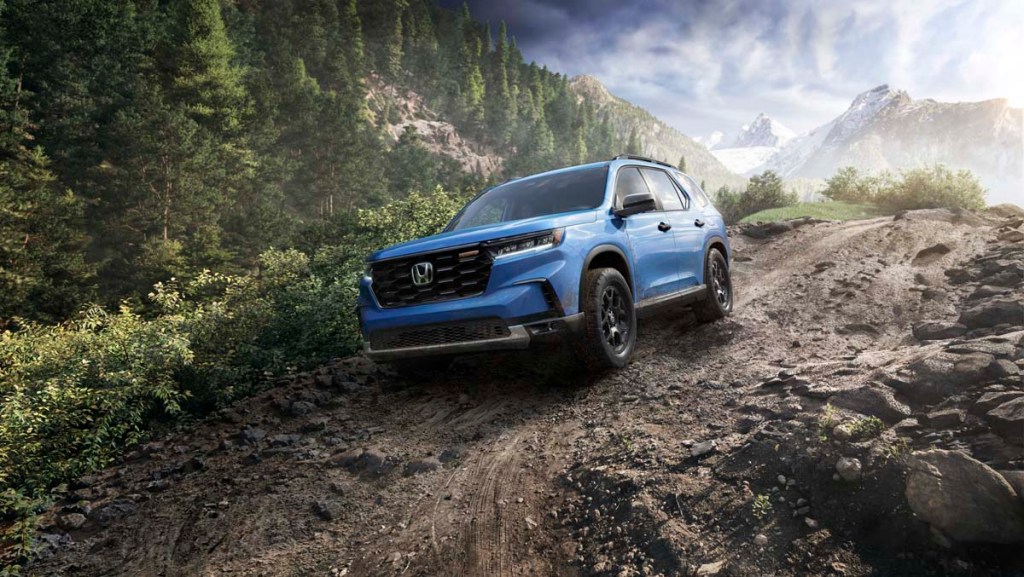



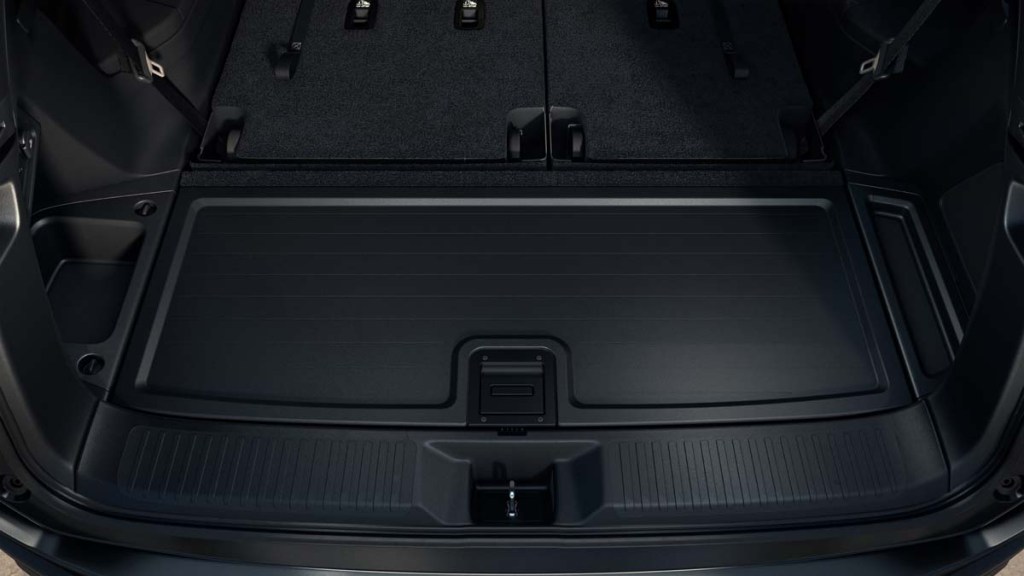
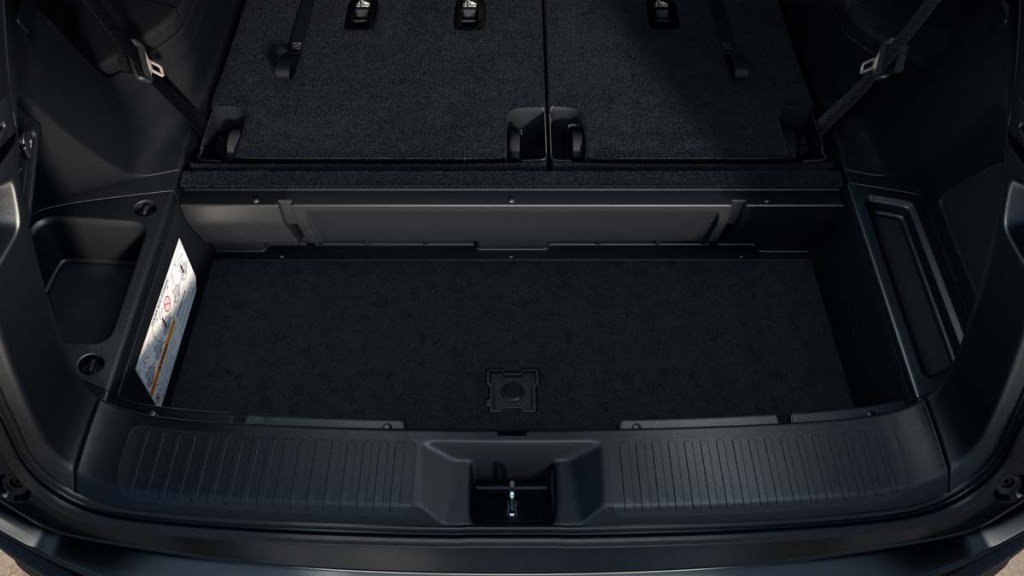
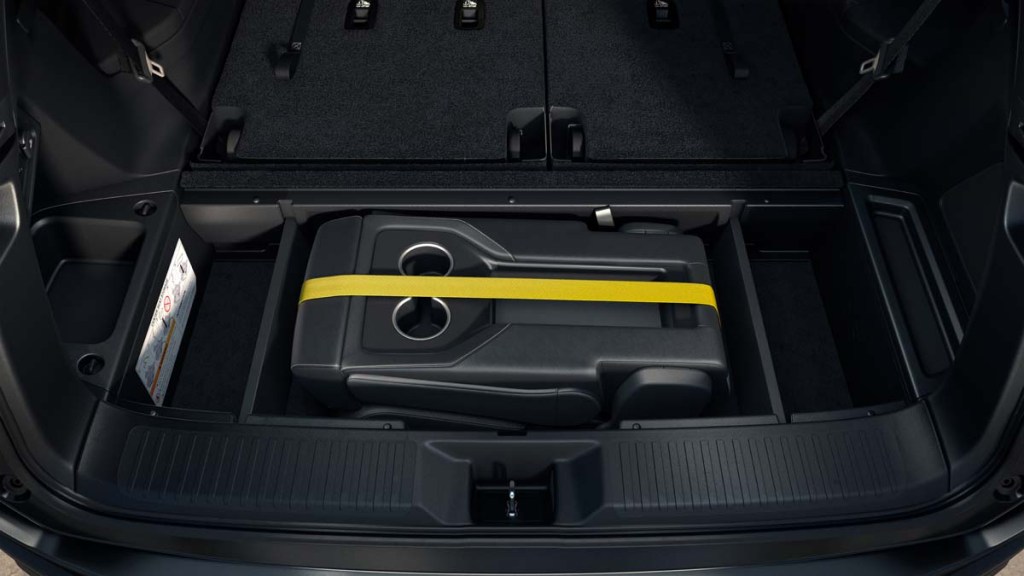
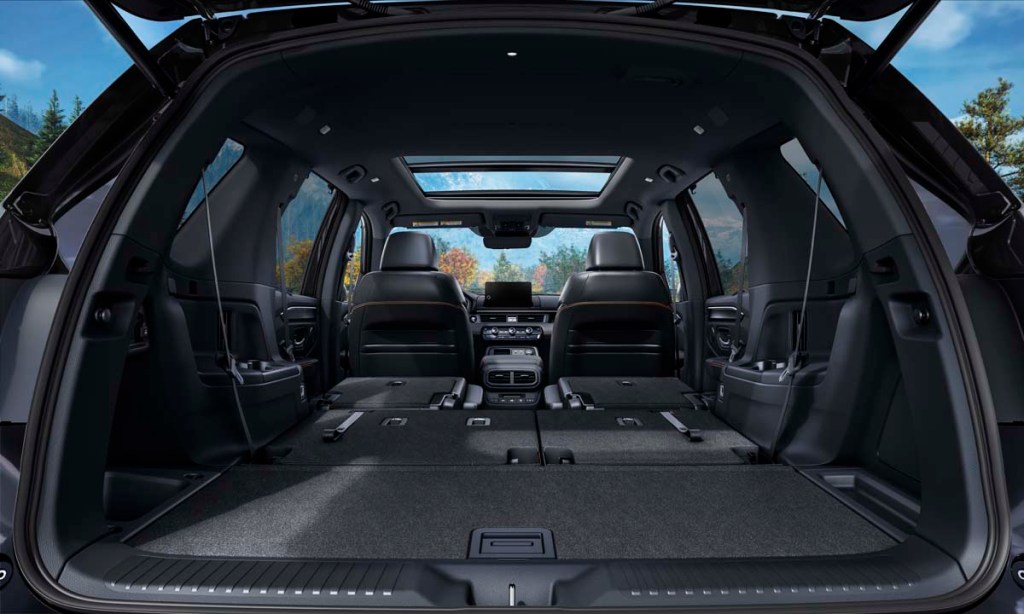
Pilots can be equipped to carry seven or eight passengers, including one with a removable second-row center seat that stores under the cargo area. The tester was a seven-passenger version with second-row captain’s chairs. All seats offered acceptable head, knee and foot room for passengers, though accessing the third row can challenge some oldsters.
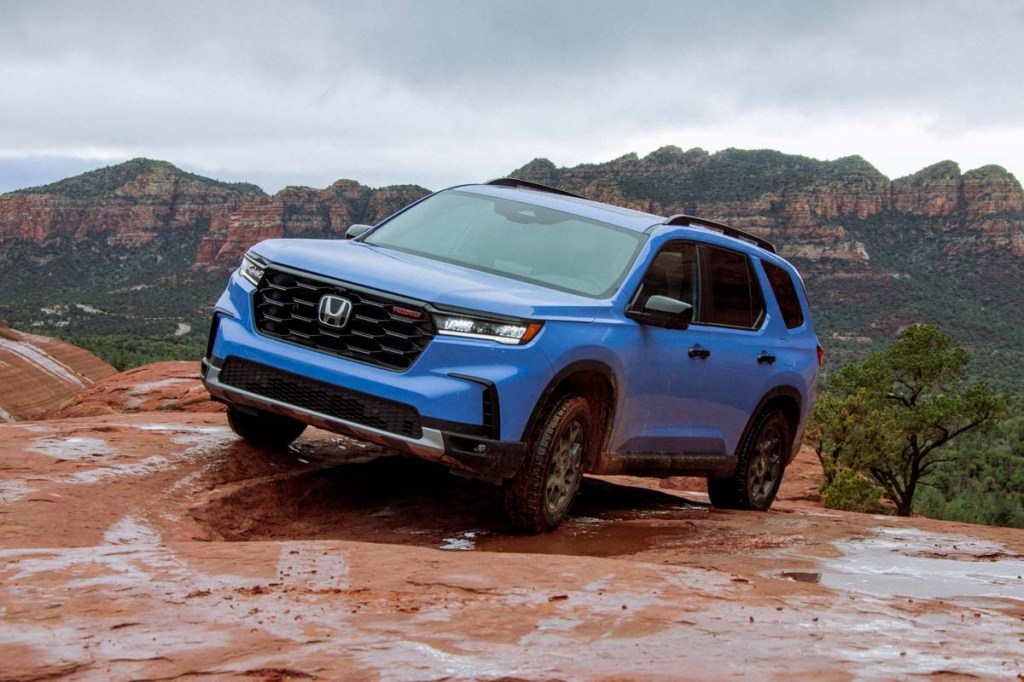
Honda describes the TrailSport as the most rugged Honda ever, with an off-road tuned suspension system, higher ground clearance, standard all-terrain tires, steel skid plates, and a full-size spare wheel and tire. It also has larger and more powerful brakes for both on- and off-road driving.
There are seven selectable drive modes: Normal, Economy, Snow, Sport, Tow (up to 5,000 pounds), Trail and Sand.
The TrailSport came with specialized equipment to enhance bashing around in trackless terrain, claiming that it has the capability to negotiate more than half of the public lands off-road trails in the U.S. The trails are categorized by the difficulty of the terrain.

Off-road enhancements include the torque vectoring, which distributes torque, or twisting force. It can send up to 100% of the torque to the right or left wheels. There’s also so-called “trail torque logic,” which increases torque and directs it to the wheel with the most traction. A newly designed hill descent control automatically maintains low speeds on steep downhill grades.
For low visibility travel through rough terrain, the TrailSport’s equipment includes a forward-facing camera that turns on automatically below 15 miles an hour when the driver selects Trail Mode. It turns off above 15 miles an hour and re-engages when speed drops below 12 miles an hour.
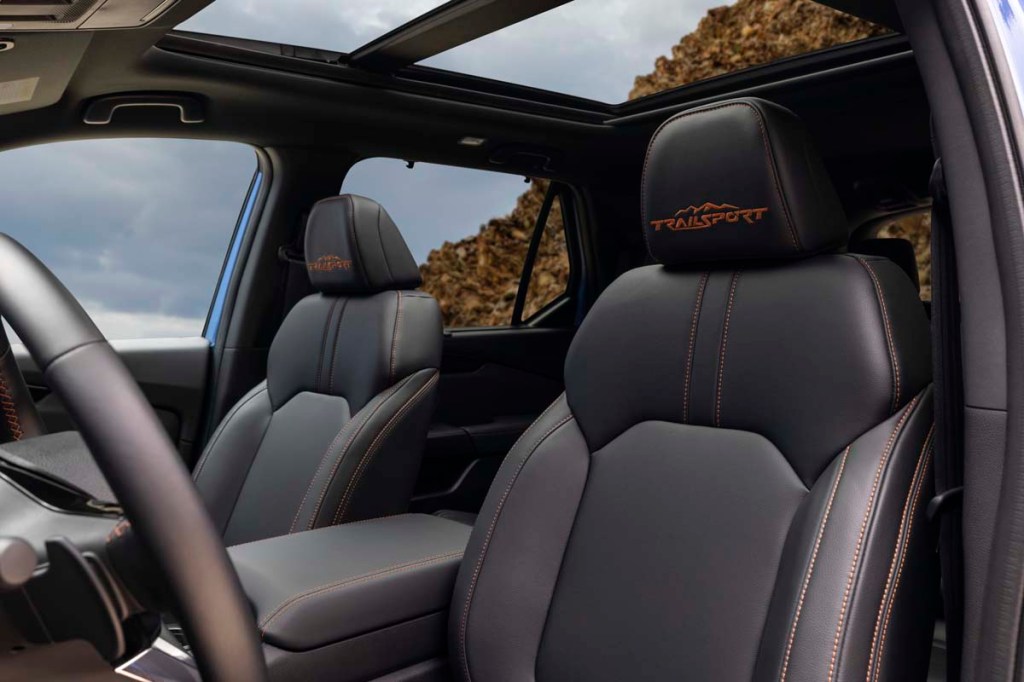
As one of the top trim levels, the TrailSport came with only one option: a panoramic sunroof that opens. Honda Safety Sensing is part of the standard equipment, and includes collision mitigation warning and braking, adaptive cruise control with low-speed follow, road departure mitigation, surround-view camera, traffic jam assist, traffic sign recognition, blind-spot monitor, cross-traffic detection, auto high-beam headlights and a parking sensor system.
The tested TrailSport model also came with a host of comfort and convenience items, including a power tail gate; tri-zone automatic climate control; heated outside mirrors, windshield and front seats; nine-speaker audio with SXM satellite radio and HD radio; wireless Apple Car Play and Android Auto; wireless device charging, and roof rails.

All of that placed the TrailSport on the higher cost side of the average price of a new car in the U.S., now around $47,000. The tester’s base price checked in at $49,695, including the destination charge. With the panoramic glass sunroof, the tested price came to $50,150.
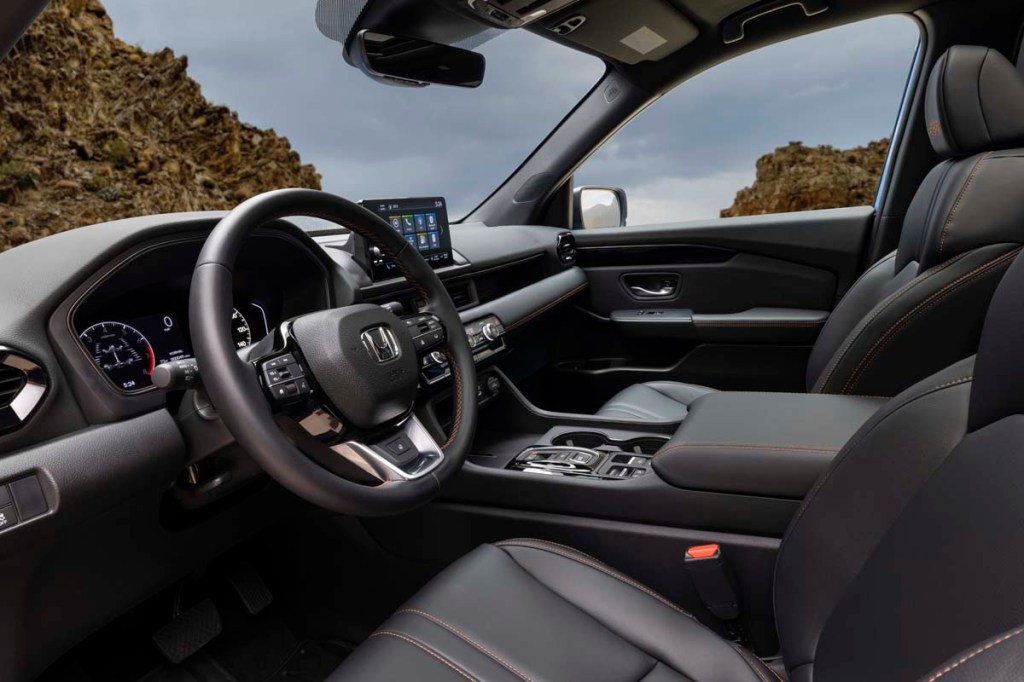
The interior is a pleasant and calm place to ride and drive, with a readable nine-inch center touch screen and instruments, and ergonomically designed controls. Front seats are supportive and comfortable for long distances.
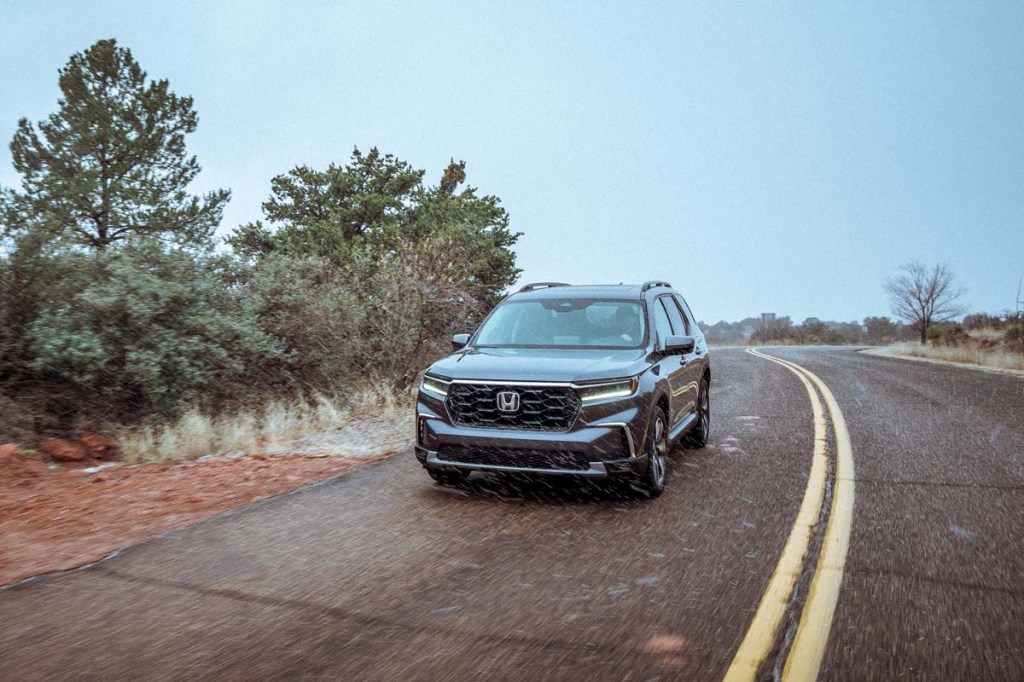
On the road, the tested TrailSport proved itself to be a capable and responsive conveyance, especially in heavy freeway traffic in and around Atlanta, GA, where its responsive steering and throttle, along with the heavy-duty brakes, proved their value in frequent lane changes and avoiding slow and congested traffic.
Despite its robust off-road oriented suspension, the Pilot delivered solid handling and even decent ride quality on most hard surfaces. Given Honda’s penchant for reliability, this is the sort of family-friendly vehicle anyone might choose for a long-term relationship. Referring to the Pilot’s interior flexibility and spacious second and third row seats, Honda already has anointed its newest addition as “king of the carpool lane.”
Specifications
- Model: 2023 Honda Pilot AWD TrailSport four-door crossover sport utility vehicle.
- Engine: 3.5-liter V6 with variable cylinder management; 285 hp, 262 lb-ft torque.
- Transmission: 10-speed automatic with torque vectoring all-wheel drive.
- Overall length: 16 feet 8 inches.
- Height: 5 feet 11 inches.
- EPA/SAE passenger/cargo volume: 154/22 cubic feet.
- Weight: 4,710 pounds.
- Towing capability: 5,000 pounds.
- EPA city/highway/combined fuel consumption: 18/23/20 mpg.
- Base price, including destination charge: $49,695.
- Price as tested: $50,150.
Disclaimer: The manufacturer provided the vehicle used to conduct this test drive and review. Photos ©Honda
 Frank A. Aukofer
 Jason Fogelson
 Matthew P. Aukofer
 Tod Mesirow
 The Review Garage
Leave a comment