

~ A DriveWays Review ~
by Matthew P. Aukofer
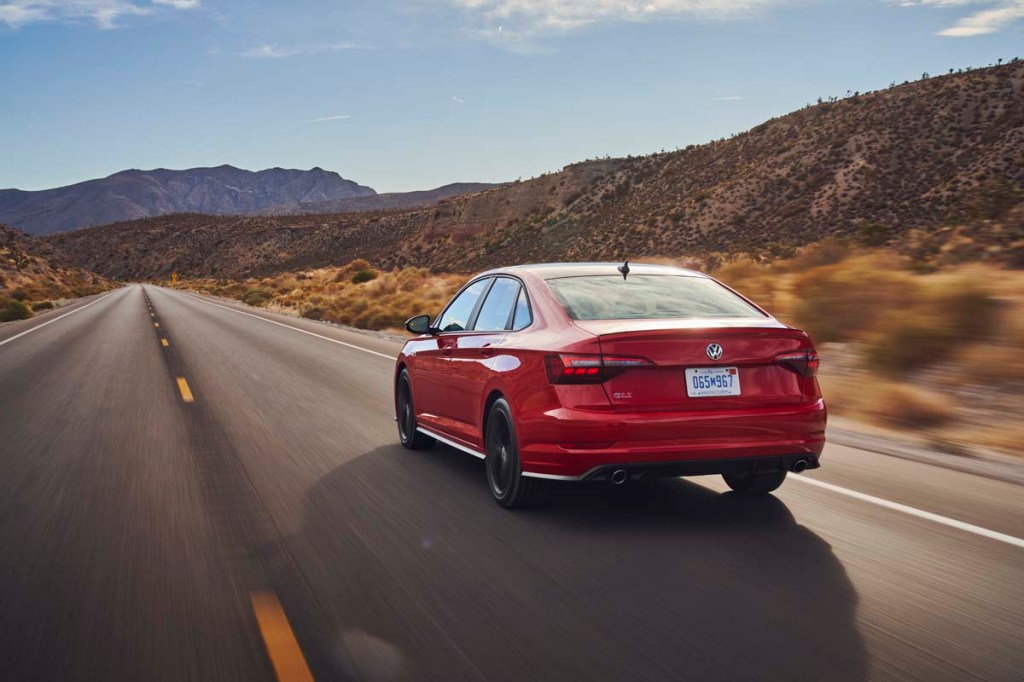
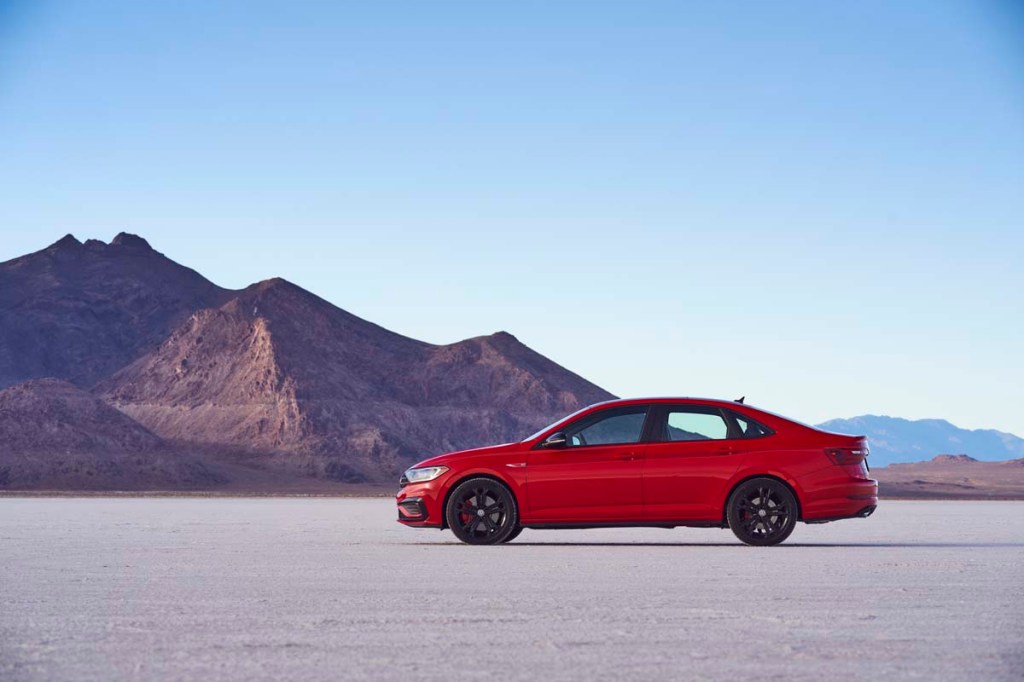
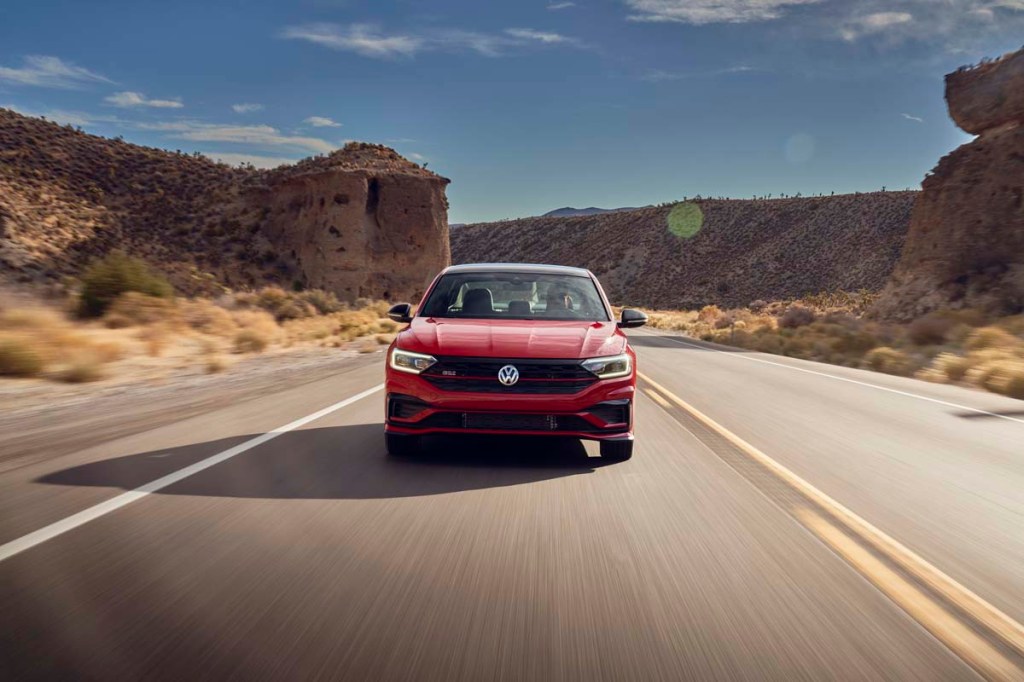
“Sleeper” is the perfect descriptor for the 2021 Volkswagen Jetta GLI 2.0T Autobahn.
The compact sport sedan packs the same high-performance traits of its hot hatchback sibling, the Golf GTI. But it does so with an unassuming, family-sedan exterior shape, a roomier backseat and a sticker price that is thousands less.
The two cars share much in common, including the same base platform and the 2.0-liter, turbocharged and intercooled four-cylinder engine, a rev-happy beast making 228 horsepower and 258 lb-ft. of torque.
If you want a blend-in-with-the-crowd sports sedan that won’t conspicuously rat you out to Johnny Law, the Jetta GLI delivers in a grocery-store-getter disguise. Even the Pure Gray paint job on the tested model could have been mistaken for a simple base primer coat if it were matte instead of a glossy sheen.
Two GLI trim levels are on offer—the S and the Autobahn. Compared to a regular Jetta, the top-trim-level GLI gets you a larger engine, the choice of a six-speed manual or a seven-speed, dual-clutch automatic transmission and sport-tuned suspension.



The GLI S includes cloth upholstery, keyless entry, push-button start, dual-zone climate control, a multi-function steering wheel, interior ambient lighting, heated front seats, rearview camera with cross-traffic alert, forward collision warning, automatic emergency braking, blind-spot monitoring, LED headlights, a WiFi hotspot and a limited-slip differential, at a starting price of $26,345.
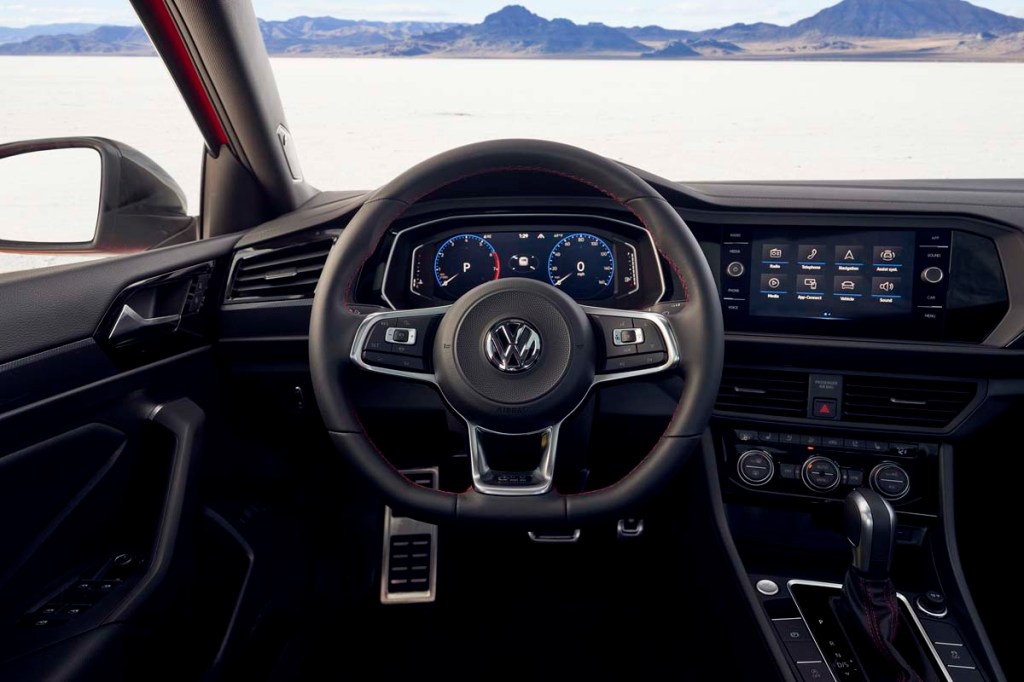
The GLI Autobahn, tested here, adds the VW digital cockpit, leather seating, adaptive chassis control, a panoramic sunroof, ventilated front seats, wireless phone charging, lane-keep assist and adaptive cruise control, and it starts at $30,745. The only option on the tester was the Pure Gray paint ($295 extra), bringing its total to $32,035, including the $995 destination fee.
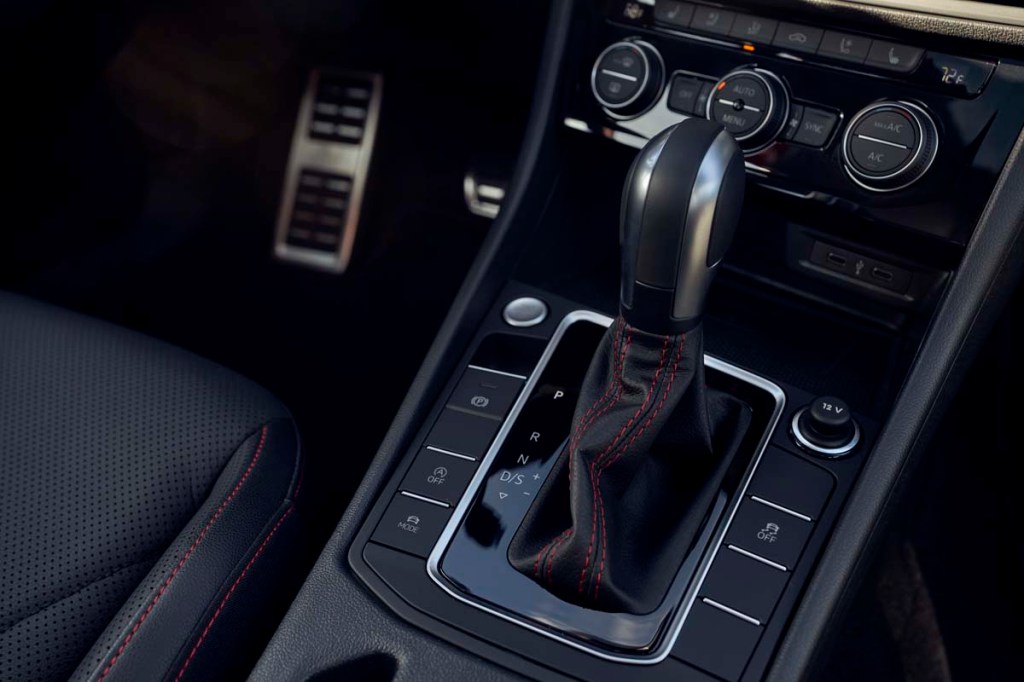
The manual transmission is precise through the throws and imparts a sporty fun-factor to the ride. The automatic direct-shift gearbox (DSG) is capable but costs an extra $800. With the manual, hill assist holds the vehicle in place when you let off of the brake pedal while the car is on an incline, a nice feature that saves you from needing to heel-and-toe it (when your toe needs to hold the brake pedal while your heel revs the accelerator).




Five drive modes are on offer: Eco, Comfort, Normal, Sport and Custom. Sport mode is, naturally, the most fun. It locks up the front differential, firms up the suspension and introduces more engine noise, a pleasingly throaty note, to make for an exhilarating experience. The test vehicle remembered the most recent drive mode after being turned off and restarted, a cool feature lacking on other vehicles.
The engine delivers seemingly more power than its numbers would suggest, and its handling is nimble in any of the drive modes. Sport mode provides the best handling, of course, but it comes at a price—a slightly harsher ride over uneven surfaces. In all modes, braking is excellent. On the highway, there is very little wind noise. You mostly hear the thrum of the tires on the road.
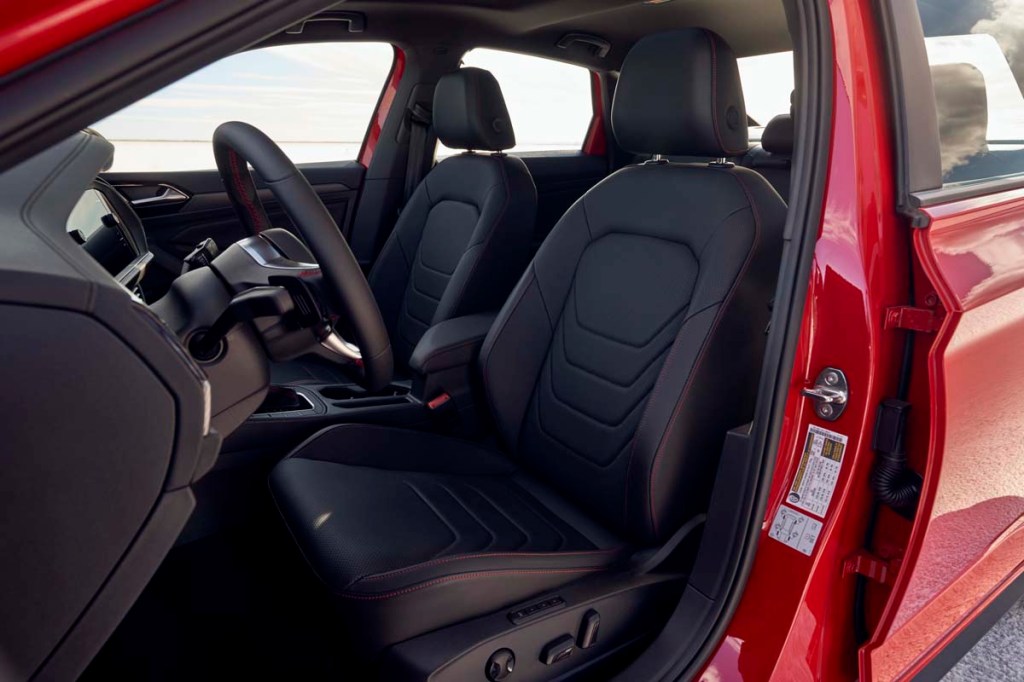
“Sleeper” can also describe the interior. It is business-like, bordering on austere. Black is the dominant color, including the headliner. Gray accents set things apart somewhat, as does a subtle bit of red stitching.
The front seats are comfortable and supportive, but they won’t knock your socks off. The driver’s seat thigh height was not independently adjustable from the overall seat height, which was annoying because it forces you to raise or lower the entire seat to get the desired leg angle to the pedals.
Control layout is good, apart from the driver’s door power window/mirror switches, which are located under your forearm instead of at your fingertips.

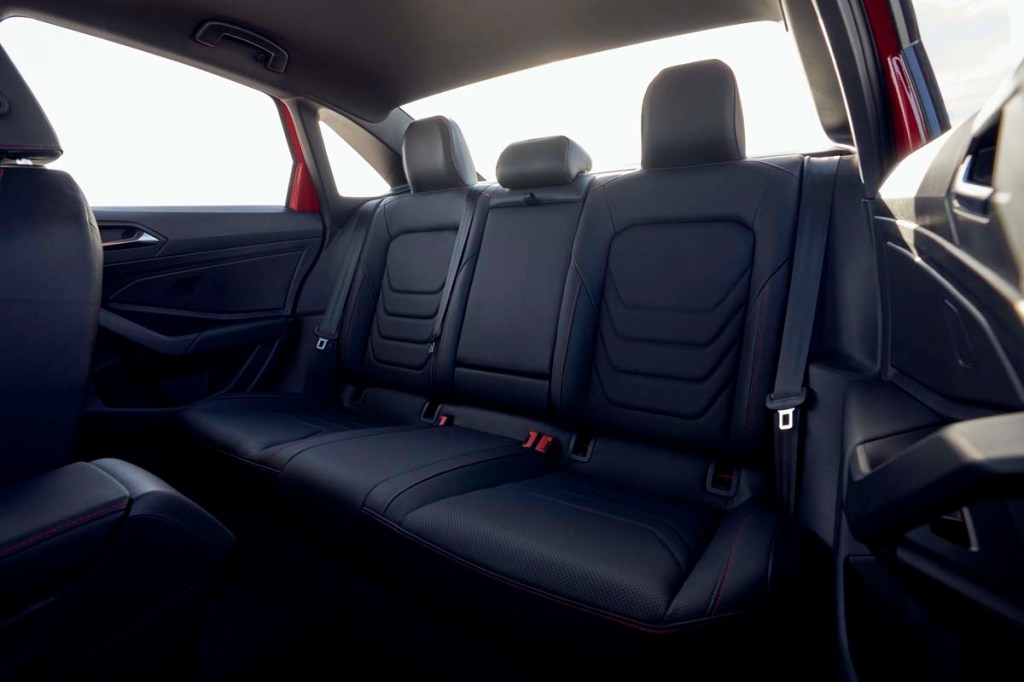
The rear outboard seats also are comfortable with plenty of leg and head room, but the center passenger sits on a hump and leg room is impeded by a bulge on the floor.
Two USB jacks up front and another hidden inside the center console serve the front-seat passengers but back-seat riders have no handy recharging options.
The infotainment system, featuring a 400-watt BeatsAudio sound system, is easy enough to use without cracking the manual. The system features Apple CarPlay and Android Auto, but my iPhone 7 had a terrible time making and keeping a connection, so check your device if this is important to you.
It’s also worth noting that the sunroof shade is made of mesh, so it’s not possible to get 100% light blockage overhead. The test vehicle also had a persistent rattle that seemed to emanate from the right side of the dashboard or from the front passenger door area. That was disconcerting on a vehicle with less than 5,000 miles on it.
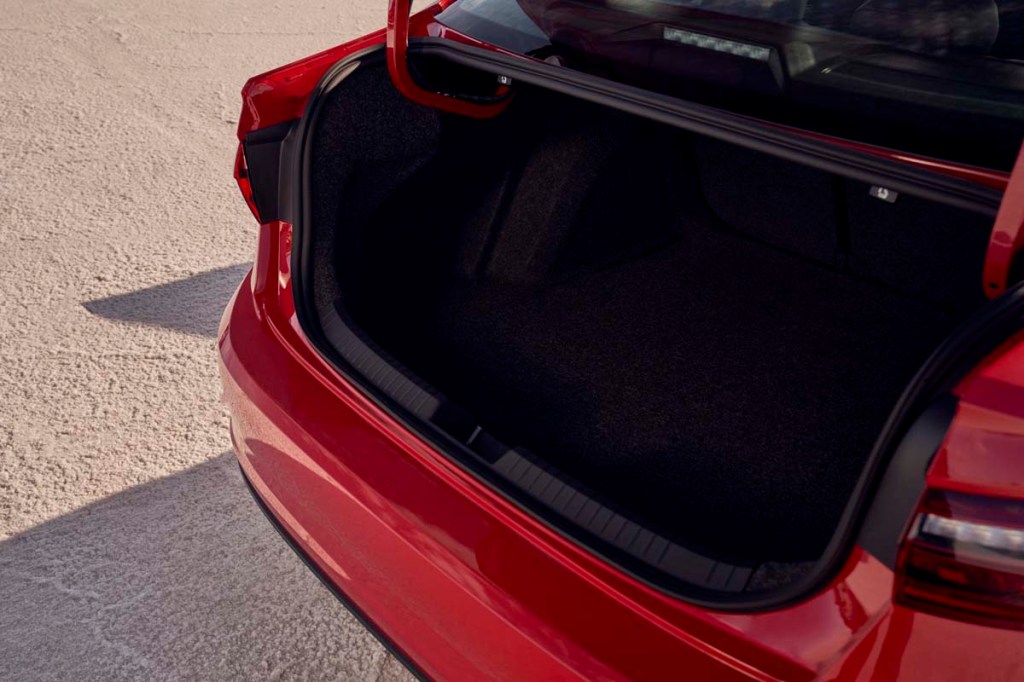
VW claims 14.1 cubic feet of space for the trunk, but honestly it seems like more—even with its emergency spare tire. Many manufacturers are foregoing the spare tire altogether in favor of run-flat tires to save space.
For backyard mechanics, it’s worth noting the hood is heavy—so heavy that the support bar bows under the weight and there are no shock assists to keep it from slamming down hard. So watch your knuckles!
Specifications
- Model: 2021 Volkswagen Jetta GLI 2.0T Autobahn, four-door, five-passenger compact sport sedan.
- Engine: 2.0-liter, turbocharged/intercooled 16-valve inline four-cylinder, 228 hp @5,000 rpm, 258 lb-ft torque @ 1,500 rpm.
- Transmission: Six-speed manual with various drive modes; front-wheel drive.
- Overall length: 15 feet 5 inches.
- EPA/SAE passenger/trunk volume: 95/14 cubic feet.
- Weight: 3,228 pounds.
- EPA city/highway/combined fuel consumption: 24/33/28 mpg. Regular unleaded gas.
- Base price, including destination charge: $31,740.
- Price as tested: $32,035.
Disclaimer: The manufacturer provided the vehicle used to conduct this test drive and review. Photos © Volkswagen
 Frank A. Aukofer
 Jason Fogelson
 Matthew P. Aukofer
 Tod Mesirow
 The Review Garage
Leave a comment